Author: Reach Marketing Pro

  • Referral Program Benefits: How Automated Platforms Enhance Your Referral Marketing Efforts

    Referral Program Benefits: How Automated Platforms Enhance Your Referral Marketing Efforts

    No matter the industry your business is in, an online referral program benefits your bottom line significantly. From increased customer retention to strengthened brand trust and higher conversion rates, nurturing your loyal network is essential.

    Learn more about referral marketing programs, their advantages, and why your business should leverage automated platforms to help supercharge your growth.

    What is a Referral Program?

    A referral program is a system that encourages your existing customers to recommend your company’s products or services to people they know personally. It’s typically reward-based to incentivize them to promote your brand, such as future purchase discounts, store credits, and free products.

    Referral programs are designed to help expand your customer base within your current audience’s network and gain the benefits they offer.

    7 Benefits of Referral Programs & Automated Platforms for Businesses

    A graphic of a person sharing a product on a megaphone with three customers

    Below are seven ways an automated referral program benefits your business.

    1. Automated Customer Referral Acquisition & Engagement

    Did you know that referrals are the highest customer acquisition channel? Referral marketing statistics show that referrals convert three to four times more and drive at least five times more sales via offline word of mouth–including more than paid advertising impressions! 

    Depending on the referral marketing software, they typically have key automated features such as:

    • Triggered welcome emails for new customers with pre-written messaging
    • Unique generated referral links for current customers to share 
    • Targeted referral campaigns on social media channels 
    • Limited-time monthly challenges, giveaway winner emails with reminders, and reward points

    Brands with referral programs can utilize automated platforms to increase conversions and customer engagement even further.

    2. Streamlined Referral Marketing Workflows

    Referral marketing platforms streamline workflows to make your business more productive and profitable. Tasks like tracking and rewarding referrals can be time-consuming when done manually via spreadsheets or emails–especially for large customer bases.

    When your staff becomes more efficient in performing daily referral responsibilities, it becomes more cost-effective for your company.

    3. Organized Referral Management

    In addition to staff workflow productivity, online referral programs bridge your teams together more efficiently via organized referral management. When your sales and marketing departments use one automated referral platform, it centralizes all customer data and communications.

    They’ll be on the same page and see customer lifecycle updates in real time by preventing siloed-related issues.

    4. Increased Customer & Brand Loyalty

    A graphic of a person attracting customers with a magnet on a laptop

    Customers who refer your products or services are like the backbone of your business and should be rewarded for that. Showing them you recognize this and care about their word-of-mouth marketing can increase retention and brand loyalty. 

    Referral marketing statistics show that more than 50% of people are more likely to refer a company when offered a personalized incentive or access to an exclusive loyalty program. This same study shows that 65% of consumers increase their purchase frequency when receiving rewards. 

    According to Annex Cloud, the top monetary and material incentives that increase a customer’s chances of referring a brand include discounts, free products, and gift cards. 

    Referral marketing software can help you capitalize on this with automated and individualized reward features, such as:

    • Annual customer anniversary swag or discounts
    • Free customer birthday gift or online store credit by a set order amount 
    • Exclusive referral promotions or offer emails based on the customer’s purchase history 

    A referral program benefits your current customers by giving them the motivation to share your business with people they know–who are more likely to trust your brand from a friend, colleague, or family member.

    5. Centralized & Customized Customer Analytics for Data-Driven Referral Strategies

    As mentioned, online referral programs centralize key customer data and communications between your sales and marketing teams. In addition to organized referral management, your staff can analyze this information to develop new and optimized data-driven strategies more effectively.

    You can identify your top referrers, key customer purchasing behaviors, and transactional data trends to learn what motivates them when creating referral campaigns.

    For example, you may find customers respond better to standalone referral programs where they get a discount for each referral after they make their first purchase. In contrast to referrer loyalty programs, which allow customers to accumulate points for each referral that becomes a customer and gain a larger reward after a set amount, like a free high-value product.

    That way, you don’t waste campaign budgets on referral strategies that aren’t performing well.

    6. Customer Privacy Data Compliance

    A graphic of a person logging into a platform on a locked desktop with a fingerprint login

    One of the most critical online referral program benefits to gain is automated customer data privacy compliance. Referral marketing software ensures your business adheres to customer data privacy laws with development compliance, ongoing security updates, encryption, and secure third-party app integrations. 

    This feature is especially crucial for companies with large-scale customer data platforms that require strict cybersecurity to prevent their information from being unlawfully collected or leaked.

    7. Simplified Business Scalability

    Online referral marketing programs make it simpler to scale your business and expand market reach. From automating manual tasks like reward allocation to centralizing siloed sales and marketing teams and centralizing key customer data, it gives you more time to focus on company growth. 

    Depending on the referral marketing software, some offer scalability-focused features such as:

    • Landing page integrations with simplified code for referral campaigns 
    • Generated omnichannel referral messaging with links for customers to share easily across the platforms they use, like social media, email, and texts
    • Automated post-purchase referral promotion emails 
    • Personalized rewards for those who referred multiple people and converted them into new customers

    Accessing your loyal customers’ personal network allows your brand to reach into untapped markets and cost-effectively grow your audience within your target demographic. 

    Work Smarter, Not Harder: Let Your Loyal Customers Refer Your Business For You

    Your loyal customers are arguably the most important advocates for your brand. Capitalize on their efforts in the long term with ongoing growth opportunities. 

    At Reach Marketing Pro, we offer Proferra, a platform to simplify and optimize your referral marketing process, including:

    • Customer data dashboard setup with configurations per your unique business goals and branding guidelines 
    • CRM integration to centralize all referral data into your existing systems seamlessly
    • Custom landing page design with an embedded form to capture key referral and affiliate information for future campaigns

    Have more questions about the Proferra platform or our referral marketing services?

    Contact us to learn how we can help you foster customer relationships and boost sales today!

  • Google TV Ads: How They Work & Differences From Other CTV Aggregators

    Google TV Ads: How They Work & Differences From Other CTV Aggregators

    With Google recently launching a new connected TV (CTV) network, businesses can now leverage this platform to advertise to more streaming audiences. As more people switch from traditional cable television to content streaming providers, CTV advertising has emerged to help brands expand their market reach.

    Learn more about Google TV ads, its opportunities, and the differences between other CTV aggregators.

    What is Google TV?

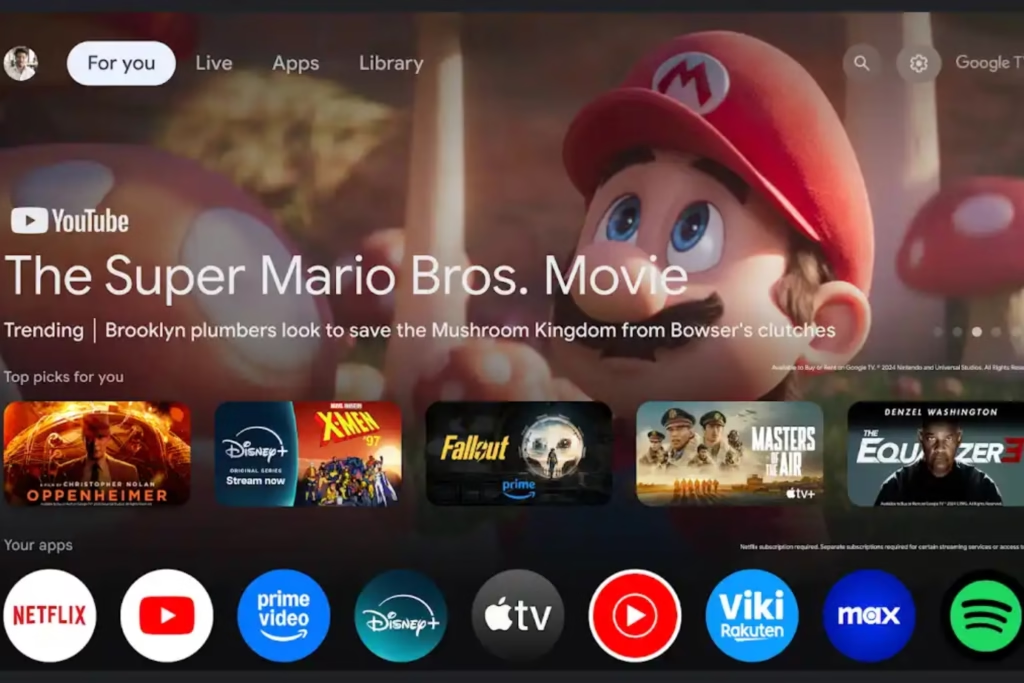
    A screenshot of Google TV's home screen with The Super Mario Bros Movie, top pick movies, and multiple apps displayed
    Credit: Google TV

    Google TV is a smart TV and smartphone streaming operating system (OS) that centralizes multiple streaming services into one platform. It allows viewers to access in-stream video content without leaving the home screen, including YouTube TV, Netflix, and Disney+. 

    With over 800 live TV channels in a single guide and 10,000+ apps, Google TV has more free channels in one place than any other smart TV platform.

    What is CTV Advertising?

    CTV advertising delivers in-stream video ads on smart TVs exclusively, such as Roku, Apple TV, and Xbox. Not to be confused with over-the-top (OTT) advertising, which delivers video ads on any open internet-connected device, such as Hulu and Amazon Prime Video.

    However, they work together to run video ad interruptions, banner ads, and sponsored content. CTV is a subset of OTT, offering apps and services with no subscriptions that traditional cable requires. OTT and CTV are interconnected, as one cannot exist without the other.

    The Rise of CTV and Fall of Traditional Cable TV

    Now that people don’t have to jump from app to app to watch different shows, movies, sports, live streams, or video games, the demand for CTV advertising has increased due to the enhanced user experience (UX). 

    A 2025 study shows that 86.7% of U.S. households cut the cords of traditional cable TV, with two out of five stating the main reason was the preference for streaming. This same study also projects that over 80.7 million U.S. households will use non-pay TV services by 2026, as the number of cable TV net subscribers has been declining by around 5,000 annually.

    The future of advertising is streaming, and now, more than ever is the time for businesses to take advantage of CTV ads to reach audiences where they are.

    Google TV Ads vs. Other CTV Platforms: What’s the Difference?

    A graphic of the Roku home screen on a smart tv with a remote and gray striped background
    Credit: Roku

    Below is a comparison of Google TV ads vs. other popular CTV aggregators, like Roku Ultra and Android TV, so you can understand the differences they offer in advertising.

    Google TV Centralizes Audience Advertising Data Within Its Family Apps

    As you probably know, Google owns a suite of family apps, including YouTube, Google Search, and Gmail. With Google TV, it centralizes its CTV advertising data across them all. This capability provides key insights into your ads on Google TV platforms.

    When you know how users interact on each Google TV channel, it allows you to make more accurate, data-driven CTV advertising decisions. You’ll have a better understanding of your ad placements based on the most used platforms and devices. 

    Additionally, you can develop advanced targeting strategies in multiple areas, like Google Shopping and Search, to follow users along their buyer’s journey with streamlined reporting as the data is centralized for you.

    Google TV Ads Cannot Be Segmented Separately

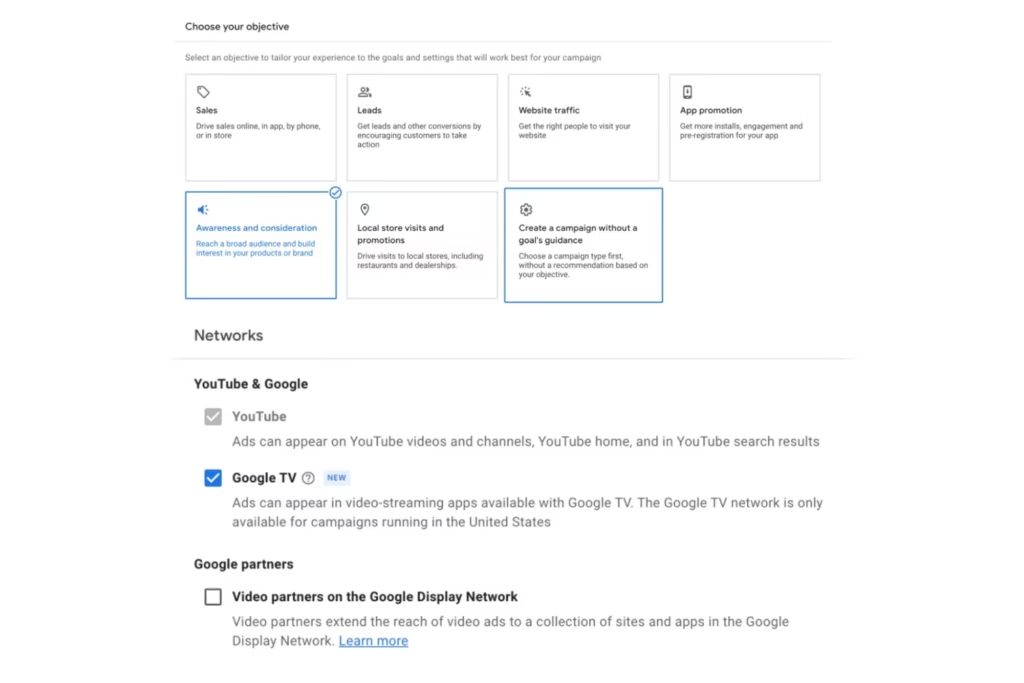
    A screenshot of the Google Ads campaign dashboard with Google TV clicked as a network
    Credit: strikesocial

    Because Google has an integrated suite of family apps, its CTV ads cannot be segmented separately. While it allows you to pair it with only YouTube at minimum, you cannot run ads on Google TV independently like other CTV platforms. 

    Google TV Has a Limited Inventory of Programmatic CTV Ad Placements

    Since Google TV is relatively new, it has a limited inventory of ad placements on programmatic CTV buying. It may put restraints on your advertising efforts as premium placements are currently prioritized to direct buys from other CTV platforms like Peacock and Tubi. However, we expect more inventory growth in the future.

    Google TV Has Only Two Video Ad Formats

    In addition to limited ad placement inventory, Google TV also currently has two video ad formats: 15-second non-skippable in-stream ads and six-second bumper efficient reach ads. These formats focus mainly on top-funnel audiences, while other CTV platforms offer more middle and bottom-funnel targeting. 

    However, with other Google ad platforms focusing on lower-funnel user acquisition, like Performance Max, you can capitalize on all audience opportunities combined.

    CTV Advertising FAQs:

    What Does CTV Stand For?

    CTV stands for connected TV. 

    How Does CTV Advertising Work?

    CTV advertising works by delivering in-stream video ads on smart TVs. It works hand-in-hand with over-the-top (OTT) advertising, which delivers video ads on any open internet-connected device to reach all streaming audiences.

    What Are Some CTV Advertising Examples? 

    Some CTV advertising examples include video ad interruptions, banner ads, and sponsored content while streaming video content, such as shows, live streams, and movies.

    What Are Some Popular CTV Platforms?

    Some of the most recognizable CTV platforms include Roku, YouTube TV, and PlayStation.

    Should My Business Invest in Google TV Advertising?

    Investing in ads on Google TV can provide innovative opportunities to reach new audiences, which studies have shown are significantly cutting the cord to streaming services. Meeting your target personas where they are by CTV channel and device on Google TV can help your brand expand market reach.

    The Future of Advertising is Streaming–Get Started with CTV Ads Today

    As more consumers switch to content streaming providers, is your business ready to adapt its advertising efforts? Whether you want to focus on broadening your audience reach beyond living room TVs via CTV ads, hyperfocus on OTT viewers, or both for full-funnel campaigns, we can help you pick the right advertising strategy that supports your bottom line. 

    At Reach Marketing Pro, we’re a full-service marketing agency with extensive experience in CTV and OTV advertising, including Google TV. We’ll recommend the best channels and ad placements to maximize your TV ad spend budget efficiently with monthly reporting and optimization.

    Ready to join the future of advertising?

    Learn more about our CTV/OTT advertising services, or contact us today!
  • How to Optimize Performance Max Campaigns: An E-Commerce Guide

    How to Optimize Performance Max Campaigns: An E-Commerce Guide

    As an e-commerce brand, maximizing the potential of your performance max campaigns is essential to sell more products and generate greater returns on your ad spend. If you notice declining conversion rates or have difficulty analyzing complex analytics to make data-driven decisions, you likely need to learn more about this platform to improve your results. 

    Here’s how to optimize performance max campaigns to enhance your advertising efforts and better support your online store.

    How to Optimize Performance Max Campaigns for E-Commerce: A Step-by-Step Guide

    This guide will walk you through how to optimize performance max campaigns for e-commerce step-by-step.

    Create Separate PMax Campaigns for New and Existing Customers

    A screenshot of the Performance Max Campaign Objective dashboard
    Credit: Google Ads Help

    New and existing customers aren’t the same, so your Pmax campaigns shouldn’t be either when trying to target them. New customers aren’t aware of or as familiar with your brand, while current ones are already or have shown loyalty with multiple purchases. That’s why making separate ads for each is crucial for relevancy, as they have different needs and wants. 

    Pmax has a Customer Lifecycle Goal feature with unique customer acquisition and retention smart bidding modes that allow you to create campaigns for the following audience segments:

    • New Customer Value Mode: Bid higher for new customers over existing ones 
    • High-Value New Customer Mode: Bid higher for higher value new customers over regular new and existing ones 
    • New Customer Only Mode: Bid for new regular customers only 
    • Win-Back Mode: Bid higher for lapsed customers over existing loyal ones 
    • High-Value Win-Back Mode: Bid higher for higher value lapsed customers than regular lapsed ones 

    To optimize your ad bidding with specific audiences, you must upload your customer data profile lists into the platform.  Pmax utilizes AI and automation to learn about your current customers via the data you provide. Even if you’re launching a campaign for new customers, Pmax will show your ads to people with similar purchasing behaviors and demographics to your existing ones for better results. 

    Whether your goal is to increase customer retention, acquisition, or both, developing separate campaign structures is necessary to bid for the exact audiences you want to reach and reduce wasted ad spend.

    Upload Customer Sales & Traffic Data Regularly to Optimize Ad Delivery

    As mentioned above, Pmax uses machine learning based on the customer data you upload and heavily relies on it for better campaign results. However, per Pmax best practices, this should be done regularly to optimize ad delivery. 

    Input customer sales and website traffic data routinely so the platform can better target specific audiences. Doing this allows its capabilities to continuously improve by placing your ads in relevant platforms that people with transactional intent and bottom-funnel behaviors use, like Google Shopping searches and YouTube ad clicks, to increase conversions.

    Label Each PMax Campaign for Organized Ad & Audience Management

    While this may seem obvious to keep your Pmax ads organized, your dashboard can become overwhelming when running several campaigns simultaneously. Label each campaign in ways your staff can easily follow for streamlined ad and audience management. 

    Your advertising teams can better leverage Pmax’s audience sorting tools and listing groups to discover which products should be advertised for each campaign and customer group. That way, they can easily analyze previous ad performances and optimize them for better results more efficiently via organized multi-campaign data.

    Add Conversion Value Rules to Maximize Your Campaign Budget

    A GIF of the Performance Max Conversion Value Rules dashboard setup
    Credit: Google Ads Help

    In addition to automated ad placement, Pmax optimizes bids to drive more conversions based on your goals and uploaded sales and website traffic data. The Conversion Value Rule feature lets you set specific bidding conditions based on the conversion value of your existing customers, including online shop visits, audience match segments, and store location. 

    It adjusts your bidding strategy per these conversion value rules to maximize your campaign budget because you’re targeting highly potential customers with similar demographics and online behaviors—reducing wasted ad spend on irrelevant audiences as a result. If improving conversion rates on Google Performance Max is your goal, you can’t afford to miss this step.

    Design Unique Assets for the Ad Placement You’re Targeting for Optimal Results

    You can organize audience data and ad campaigns efficiently yet still not get optimal results if the visuals aren’t relevant to the people and platforms you want to reach. While Pmax has a range of one to 20 image assets allowed, Google recommends at least four unique images per ad group. 

    Because Pmax shows your ads on Google’s family platforms, like YouTube’s Home page, sponsored Gmails, and Maps suggestions, creating separate images with varying aspect ratios is crucial to complement your omnichannel campaign visually. You can even repurpose the assets from your other search campaigns, like PPC dynamic display ads, to streamline the process. 

    Designing specific assets for the platform you’re targeting improves the visual quality of your ads by following their image guidelines. It also helps attract customers, as the first thing they notice in your Pmax campaigns is how your ad looks. If you use a square Google Shopping asset that becomes stretched on YouTube, it can hinder your brand’s perception from a grainy image. 

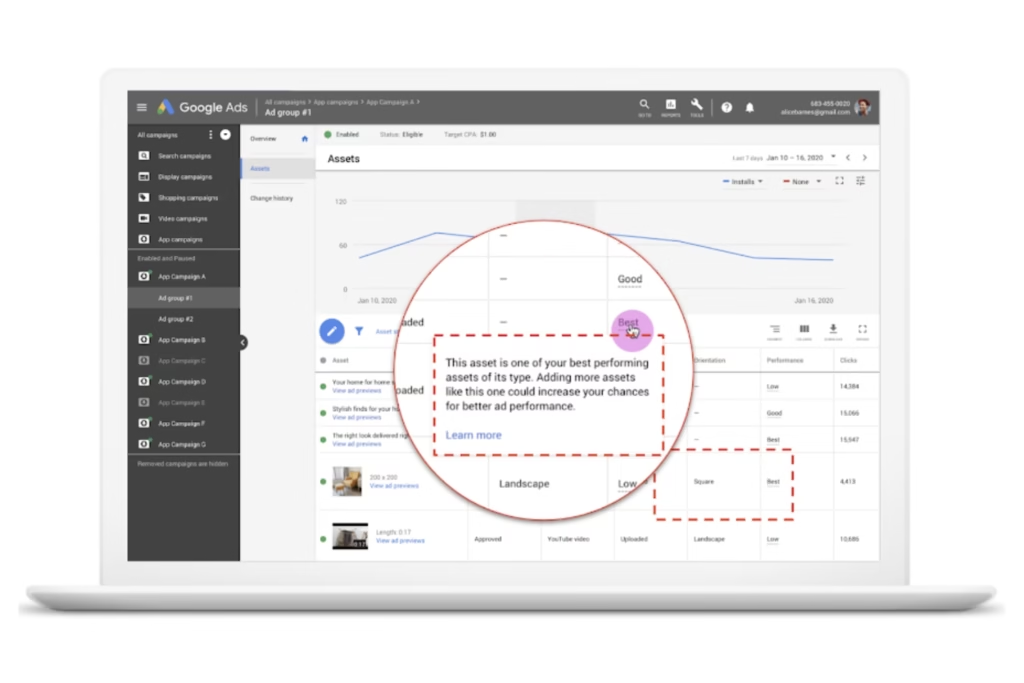
    A screenshot of the Performance Max Asset Report dashboard
    Credit: Google Ads Help

    Pmax even has an Asset Report feature that compares the visual performance across individual and group images you used in other campaigns. It has a Performance Label that organizes image assets by Best, Good, and Low based on the most triggered user actions. That way, you can make data-driven creative decisions to optimize your Pmax campaigns visually.

    Remember, your Pmax campaign images are meant to convey your product’s unique selling features. Displaying them properly based on the platform you’re advertising on and the people who use it is key.

    Make Your Landing Page Design User-Friendly & Consistent with Your Ads to Encourage People to Complete Their Purchase

    Don’t lose customers in the final step of their buyer’s journey from a bad landing page design. If users click on your ad but your website makes it harder for them to buy the product due to slow load speed or the landing page looks completely different, it can push them away from poor user experience (UX) or confusion from thinking it’s the wrong site. 

    Pmax best practices for optimized landing pages include:

    • Using the same call-to-action and keywords as your ad text for users to find the offer or discount displayed in your campaign easily
    • Designing a consistent look that mirrors your ad’s image assets 
    • Adding reviews to strengthen product page SEO and social proof
    • Creating a mobile-friendly design with balanced white space, visible contact buttons, and quick loading speed for users to shop and navigate your store on any device seamlessly

    Having a user-friendly website, including your landing pages, goes hand-in-hand with your Pmax campaigns to encourage people to complete their purchases.

    PMax Optimization FAQs:

    What’s Automatically Optimized with a Performance Max Campaign?

    Pmax automates several campaign optimization features, including:

    • Individual and group image asset performance and recommendations per campaign
    • Omnichannel budget allocation 
    • Bidding strategies
    • Ad placements 
    • Audience segment targeting 

    Can You Run Pmax with Standard Shopping Campaign?

    Yes, you can run Pmax with standard Shopping campaigns, even when advertising the same products on the same account. Google recently changed the flexibility to manage these campaigns together, which previously prioritized Pmax over Shopping automatically. 

    However, it requires a careful strategy to prevent campaign overlapping. Campaigns with the highest Ad Rank will be served to audiences based on several factors, including ad/landing page quality, auction competitors, and search queries.

    Keep in mind that PMax’s best practices are for broader audience targeting, while standard Shopping is meant for precise product targeting to maximize dual campaign performance.

    How Many Custom Images for Performance Max Campaigns Are Allowed?

    Pmax allows up to 20 custom image assets per ad group. You must have at least one image asset to launch a campaign. 

    What Are Some Tips for Improving Conversion Rates on Google Performance Max?

    Improving conversion rates on Google Performance Max must involve sales-focused optimization, including: 

    • Uploading bottom-funnel custom data routinely 
    • Setting up ad conversion tracking 
    • Creating optimized landing page designs
    • Designing unique image assets per ad group and platform you’re targeting per campaign

    Supercharge Your Online Store’s Sales with Professional PMax Optimization

    Now that you know how to optimize performance max campaigns, it’s also important to understand the commitment to do this successfully. From continuous campaign monitoring to custom graphic design and data-driven strategy development, it requires ongoing optimization to maximize results. 

    Let our Pmax pros handle this for you.

    At Reach Marketing Pro, we’re a full-service digital marketing agency with extensive experience in all aspects of Google ads for e-commerce brands. We know how to leverage the complexities of Pmax’s platform to better reach your goals from search to sale. 

    Our team will provide monthly reports to ensure you maximize your budget and campaign performance with ongoing optimization. We also have in-house graphic designers and copywriters to create your ad’s messaging and custom visuals within your branding guidelines.

    Ready to supercharge your Pmax campaign sales?

    Learn more about our PMax services, or contact us today!
  • Google Ads Report Editor: How to Use This Tool for Effective Client Reporting

    Google Ads Report Editor: How to Use This Tool for Effective Client Reporting

    Whether you have an outsourced advertising agency or an in-house team, Google Ads Report Editor streamlines your manual reporting processes. From template-based reports to customized ad campaign metrics and user-friendly dashboards, you shouldn’t spend more time than you have to—especially if it’s on a monthly or quarterly basis.

    Learn more about the Google Ads reporting tool and how you can leverage it to scale your client’s business more successfully.

    How to Use Google Ads Report Editor for Client Reporting: A Step-by-Step Guide

    Previously known as Google Adwords, the Google Ads Report Editor is software that automates and improves your search engine (SEM) marketing reporting processes via template-based features and customizable dashboards. For experienced SEM marketers, you can also create your own reports from scratch.

    Below is a step-by-step guide on how to use Google Ads Report Editor for clients.

    Select the Ads Report Type You Want Insights On

    Before you start, confirm which Google Ads performance report you want to create for your client. There are four automated report templates, each with unique metrics they measure about:

    Account Performance Report

    A screenshot of the Google Ads Report Editor Account Performance dashboard
    Credit: Google Help

    The account performance report measures the financial health of your client’s Google Ads account. It includes their ad budget, account billing, campaign clicks, and impressions. However, it also displays conversion metrics, like return on ad spend (ROAS), revenue, and conversions. 

    This report provides a monthly account overview of how successful your client’s advertising investments are via performance-based metrics compared to their competitors. 

    Ad Group Performance Report

    A screenshot of the Google Ads Report Editor Ad Group Performance dashboard
    Credit: Google Help

    The ad group performance report measures how relevant your client’s keywords and ads are within a specific campaign or ad group. Like the account performance report, it also shows conversions, clicks, and impressions, but for specific ads versus a general overview. 

    This report is generated daily or weekly, with multiple filters available to review the ad group performance on a deeper level. You can filter by ad type, campaign type, advertising channel, the ad group the ad belongs to, and more.  

    Campaign Performance Report

    A screenshot of the Google Ads Report Editor Campaign Performance dashboard
    Credit: Google Help

    The Google Ads campaign report measures your client’s campaign success based on ad groups and keyword performance. It displays metrics like ad impressions, clicks, click-through rate (CTR), estimated conversions, and average cost-per-conversion (CPC). 

    This report is best for determining the success of your client’s ads within a specific group or campaign for optimization opportunities and strengthening conversion rates. 

    Keyword Performance Report

    A screenshot of the Google Ads Report Editor Keyword Performance dashboard
    Credit: Google Help

    The Google Ads keyword report measures the performance of all the keywords used in your client’s account. It displays metrics like clicks, impressions, CTR, and average ranking position for a specific keyword and period. 

    This report is best for monitoring keyword performance and which ones convert the most leads. It ensures the target keywords used for each ad campaign remain relevant to Google’s ever-changing algorithm and SEO trends. That way, you can discover keywords that aren’t driving traffic and optimize them for better results. 

    Search Term Performance Report

    A screenshot of the Google Ads Report Editor Search Term Performance dashboard
    Credit: Google Help

    The Google Ads search term report determines which queries generate ads on the search engine results page (SERP). It displays metrics like ad clicks, impressions, and CTR.

    The difference between the keyword performance and search term report is the data provided. Search terms are the specific phrases people use when shopping or searching for services online. You can use this to create ad and landing content that’s shown to trigger ads in the SERP. 

    Keywords don’t show ad triggers. They display how many people use it to shop or search for services online and how difficult it’ll be to rank for it in your ad campaign. Additionally, if your clients have dynamic search ads, keywords aren’t used for these campaign types.

    This report is best for generating weekly or monthly to stay up-to-date with your client’s campaign search term performance. It ensures you use queries that trigger ads in the SERP while using data-driven strategies for campaign optimization. 

    Understand the KPIs You Want to Share

    When providing ad reports to clients for Google PPC efforts, consider their goals to determine which KPIs you want to share. It’s key to report on specific metrics relevant to their bottom line and ad campaign strategy to measure its success efficiently. 

    Average CPC (Cost-Per-Click)

    Average CPC shows how much your client paid for each ad click and their budget’s effectiveness based on what this metric measures. It’s calculated by dividing the total cost of clicks by the number of total clicks. 

    Average CTR (Click-Through Rate)

    Average CTR is the number of people who clicked through the ad’s call-to-action CTA). It measures how successful the ad’s engagement was in encouraging people to learn more about your offer.

    Campaign Overview

    If you have clients with multiple Google Ads campaigns, this metric provides an overview report of which ones were the most successful comparably. It’s the first dashboard you see when logging in and displays metrics like impressions, clicks, CTR, and more. 

    What makes this metric unique is that it also shows diagnostic insights of your ad campaigns. It spots specific issues that may contribute to your ad not generating conversion and even offers tailored recommendations. It skips the legwork of analyzing vast amounts of performance data so you can fix it faster. 

    Conversion Rate

    Conversion rate is the average percentage of people who click into the ad’s CTA and become a customer as a result. It measures the campaign’s overall success because it contributes to your client’s ROI based on their ad spend.

    CPC (Cost Per Conversion)

    CPC is how much your client paid on average for each ad conversion. It measures ad campaign profitability by calculating how much revenue they generated after conversions and the costs they paid for them.

    Impressions

    Impressions are how many people your ad was shown to. It measures brand awareness and market reach, so your client understands their campaign’s visibility scale for their target audience.

    Quality Score

    Quality score is a unique metric specific to Google Ads Report Editor that measures the relevancy of your ad group’s keywords, ads, and landing page. It determines how your client’s ad campaign strategy should look by comparing it, on average, to their competitors.

    Your ad quality score is measured on a scale from one to 10 and calculated by several factors. These include your client’s expected CTR, landing page user experience, and ad relevancy based on your target audience demographics.

    Look for Reporting Trends & Opportunities

    A graphic of a person reporting on sales with a pie chart and line graph and briefcases in front

    Google Ads reporting software is comprehensive. Not to mention, the wide range of metrics it provides can be overwhelming to clients who aren’t PPC-savvy. Don’t just share the report with a long list of data. You should also explain what these numbers represent.

    When creating Ads reports, analyze them for common trends and opportunities to make data-driven campaign decisions for your clients, such as:

    • Consistent negative and positive performance metrics over a specific time to forecast future ad performance 
    • Comparison of historical and new ad campaign performance data to determine what was successful for optimization opportunities
    • Review of real-time data to discover ad performance issues and successes quicker to better meet campaign goals with cost-effectiveness

    Your clients invest in PPC and rely on you to translate Google Ads jargon into digestible data. These reporting practices help them understand their campaign performances more easily while seeing the value in the services you provide.

    Spend Smarter On Your Ads, Not Harder: Optimize Your Campaigns with PPC Pros 

    The last thing your client wants is to see their advertising budget wasted from poor campaign performance. Leave it to the PPC pros to maximize your success. 

    At Reach Marketing Pro, we’re a full-service digital agency with extensive experience in all aspects of Google Ads and customized reporting to focus on metrics that matter for your client’s bottom line. We’ll show you what’s working and not every month to optimize your ad campaigns for better results. 

    Our in-house team of PPC experts, graphic designers, and copywriters customize ads and landing pages to ensure the full cycle of their ad campaign is unique to their brand.

    Ready to generate greater returns on your clients?

    Learn more about our SEM marketing services or contact us today! 
  • Product Page SEO: How E-Commerce Brands Can Maximize ROI From Search to Sale

    Product Page SEO: How E-Commerce Brands Can Maximize ROI From Search to Sale

    As an e-commerce brand, investing in product page SEO is non-negotiable. Selling products is the core mission of your business. If your product pages aren’t properly optimized for search engines and users alike, they likely won’t perform successfully. 

    SEO for e-commerce product pages is essential to promote online visibly, clicks, and conversions from organic traffic. If shoppers and search engines can’t discover them or push them away from poor SEO, they won’t support your bottom line as they should. 

    Learn e-commerce product page best practices and how you can generate a greater ROI with SEO content optimization. 

    SEO for E-Commerce Product Pages: A Step-by-Step Guide


    Below is a step-by-step guide on product page SEO with common mistakes to avoid.

    Write Unique Product Page Titles & Descriptions

    A graphic people writing content on a page with a pencil

    SEO for product descriptions and titles requires unique copy for better search visibility, especially for e-commerce brands with large catalogs. Duplicate copy in your product pages can cause crawling delays from search bots because they don’t know which version to save in their database for indexing. 

    It also wastes your crawl budget, causing you to wait until you can request again, leaving your product pages undiscovered online. 

    More ways to improve your SEO product descriptions include:

    • Internal links to relevant product pages in the same collection to promote upselling and cross-selling opportunities
    • Backlinks from reputable sites that recommend your product to demonstrate trustworthiness and credibility
    • Not using the same product descriptions as the manufacturer’s website, as they’re not created for SEO or shoppers and keep your brand separate

    In addition to unique titles and descriptions, they should also provide an added value proposition. Instead of only explaining what your product does, showcase what customers will gain from it.

    If you’re selling winter coats describing them as, “engineered to keep you warm” is obvious, as it’s what they should do. Saying something like, “engineered to keep you warm at -10° F” is a stronger selling point.

    Displaying your product’s specific benefits, along with its features, better addresses your buyer persona’s challenges and concerns.

    Optimize Your Copy with the Correct Search Intent

    All shopping starts with a search. While you may be familiar with keyword optimization, businesses often make the mistake of choosing the wrong ones. 

    Your keyword research is more than finding queries with the highest search volume and lowest difficulty from your competitors. It should also include selecting keywords with the right search intent to attract the appropriate audience. 

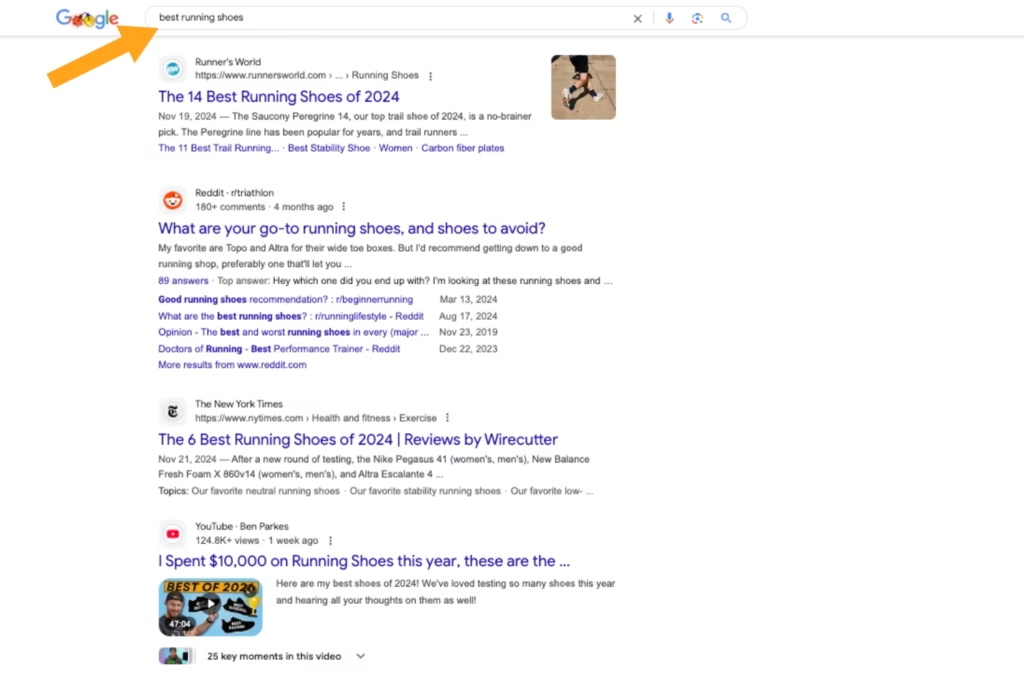
    For example, if you’re an athletic footwear brand and optimize a product page description with a keyword, like “best running shoes” this wouldn’t provide the best SEO opportunity. This keyword generates blogs in the search engine results page (SERP), not product pages.

    Screenshot of Google search results for best running shoes with a yellow arrow pointing at the search bar

    While “best running shoes” has a commercial search intent, the SERP shows users comparing options by reading blog recommendations before buying. Optimizing your product pages with this keyword can cause fewer people to click on them or quickly leave because that’s not what they’re looking for with that search query.

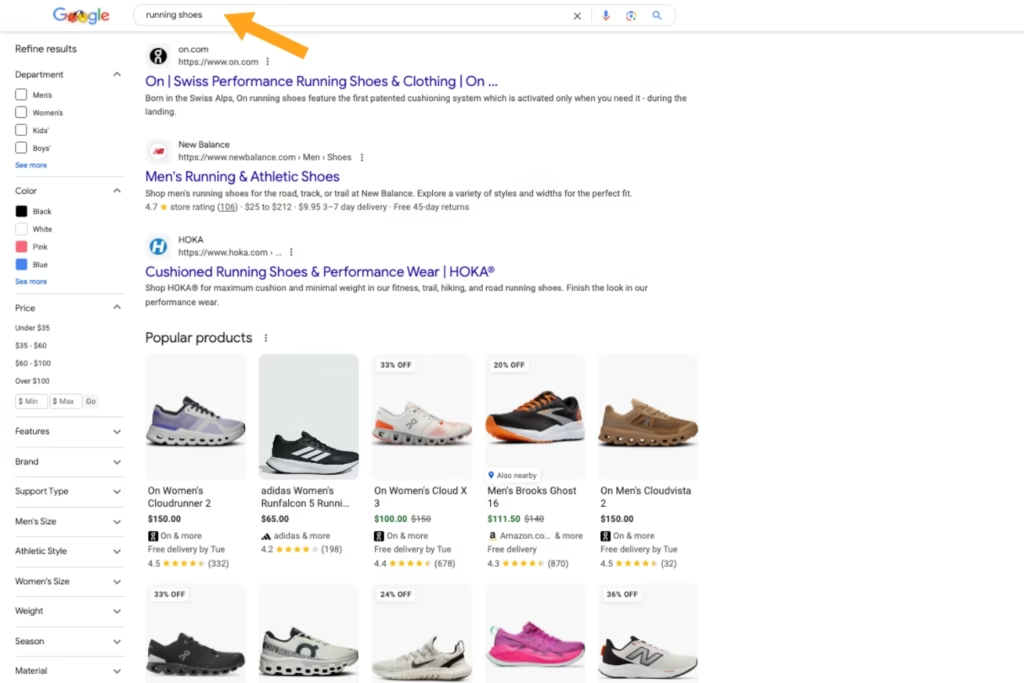
    A transactional keyword, like “running shoes” generates product pages in the SERP, showcasing the intent of people ready to buy. Adding this to your product’s description and page URL attracts relevant traffic, promoting a higher chance of converting them.

    A screenshot of the Google search results for the keyword running shoes with a yellow arrow pointing at the search bar

    A slight keyword change in your product page SEO can significantly impact its performance. Luckily, SEO platforms like SEMRush tell you the search intent behind every keyword, so you don’t have to guess. 

    However, it’s easy to check yourself. Simply enter the keyword into a search and review the SERP for what they show. If it generates product pages, you have the correct search intent.

    Use Clear, Captivating, & Optimized Product Visuals

    A graphic of three people adding photos to a website page

    While you may have high-quality product page images, are they captivating enough to customers? In addition to displaying your product, fully showcasing how they apply to the real world resonates further with shoppers. Instead of only using product images on a white background, include lifestyle visuals, too. 

    For example, if your brand sells hiking boots, include photos of people in a mountainous landscape wearing them to provide a better visual context. If you sell office chairs, use a short-form video to show their different sitting configurations, demonstrating the product’s diverse usability and comfort further.

    Once the product page visuals are finalized, ensure they’re optimized next. Writing image alt tags with descriptive language ensures it’s ADA-accessible for all online shoppers. Also, aim to use target keywords in your image alt tags naturally to improve your page’s search visibility via metadata.

    Implement Structured Data Markup to Generate Rich Results on Google

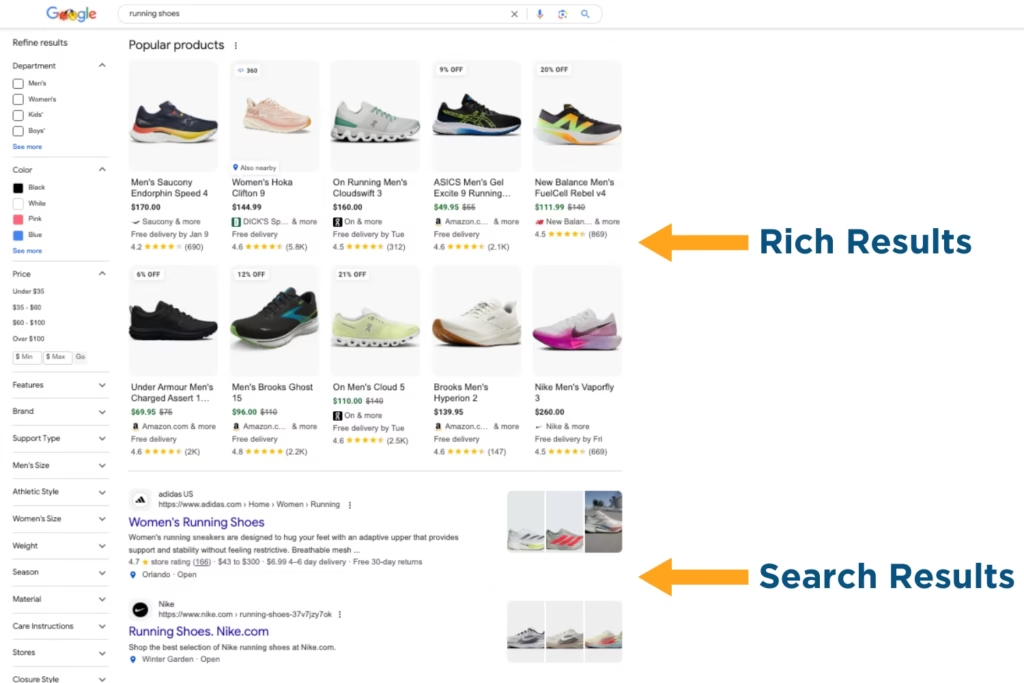
    Screenshot comparing the rich and search results on Google for running shoes

    Structured data markup is one of the most critical components of product page SEO. In a saturated online market, e-commerce brands must stand out in the SERP more than ever. As a form of on-page SEO, structured data markup helps your product pages generate rich results

    Rich snippets visually showcase your product differently than the SERPs and are placed above traditional search results. They’re designed by Google to enhance the shopping experience without having to click on your online store. When users click on rich results 58% of the time versus 41% for non-rich results, it’s worth optimizing your product pages for.

    Examples of structured data types for e-commerce product pages are:

    • Review Snippets: Average rating, number of reviews, reviewer information, etc.
    • Product Schema Markup: Carousel image, pricing, product availability, etc. 
    • Sitelinks Search Box: Sitewide product search in the SERP, without having to click on your website
    • FAQs Schema Markup: List of common product questions, assembly directions, etc. 

    Structured data markup gives customers a streamlined shopping experience while providing Google with the standardized language it requires to generate rich results for your product pages.

    Create Valuable Call-to-Action (CTA) Buttons

    As an online store, you must encourage users to take action via CTAs to increase click-through rate (CTR) and conversions. These CTAs should be more than buttons below your product description stating, “Buy Now.” They should also be convincing of the value your products bring. 

    If you’re a skincare brand selling facewash, instead of creating a “Shop Now” CTA button, write something like “Start Your Self-Care” to showcase to customers that it’s a worthy investment in themselves. 

    Additional ways to create valuable CTAs for e-commerce product pages include:

    • Using Multiple CTAs to Meet Customers Where They Are in Their Buyer’s Journey: add to wishlists, you might also like, one-click checkouts, save payment methods, address autocomplete, email signup discounts, etc. 
    • A/B Testing Button Designs to See What Resonates Best with Your Target Audience: button locations, shapes, colors, fonts, sizes, etc.
    • Placing CTA Buttons Strategically to Streamline Users From Product Page to Purchase: minimal pop-ups, responsive button designs on mobile and desktop, etc. 

    Conduct a Site Audit to Correct Page Performance Issues

    Graphic of three people conducting a website audit on a desktop

    You can do all the optimization in the world and still not have success if your product pages have performance issues. If they have slow loading times or poor mobile design, they can push potential customers away. Also known as user experience, it’s about making your site easier to use for a seamless shopping experience.

    Look for the following issues in your site audit to improve your product page SEO:

    • No breadcrumbs for easy site navigation from product page to checkout
    • Low-quality compressed product visuals on mobile  
    • More than four seconds in page load speed on desktop and mobile
    • No SSL certificate to secure your website and shoppers’ saved sensitive payment information

    User-friendly e-commerce websites help people discover, browse, and purchase from your product pages more. 

    Stop Losing Shoppers from Poor Product Page SEO: Get Found Faster & Sell More Today

    Drive more transitions to your product pages with digital marketing professionals. At Reach Marketing Pro, we’re a full-service agency with extensive experience in site-wide optimization, including Shopify, WordPress, and custom e-commerce websites. 

    We have graphic designers to create customized, compelling product visuals per your unique brand. Our SEO copywriters write effective product page copy that adheres to Google guidelines and customer needs. Additionally, our web designers/developers ensure your site’s shopping experience is seamless and engaging. 

    Together, our in-house team provides you with the full suite your e-commerce website needs for a stronger product page performance.

    Ready to generate more organic traffic and transactions?

    Learn more about our digital marketing services or contact us to reach more customers today!
  • AI Website Buidlers: When & When Not to Use Them for Your Business

    AI Website Buidlers: When & When Not to Use Them for Your Business

    Artificial intelligence (AI) has become more widely used among businesses for web design and development. AI website builders bring numerous benefits, like streamlined troubleshooting of bugs by scanning your existing code and SEO recommendations by analyzing your current content. It skips the time-consuming manual processes with automated, cost-effective features.

    The rise of AI marketing trends still poses several risks without proper use for site builds. From accidental plagiarism to private data leaks, website building with AI still requires cautionary use as improvements remain ongoing. 

    Learn when it’s best to use AI site builders and when to hire professional web developers for your company’s needs. 

    AI Website Builders: When to Use AI or Professional Web Developers

    A graphic of an AI robot in front of a clipboard developing a project with a balance scale


    Below is a guide on AI website builder best practices, including when and when not to use them.

    When It’s Best to Leverage AI for Website Creation

    Here’s when you should use AI-powered website builders for your business. 

    Tight Site Launch Timelines

    It’s not uncommon to have delays in your web build projects. If tight deadlines are coming soon, AI site builders can streamline your launch. 

    They can accelerate the web build process through each stage, including:

    • Site design concepts with generated visuals 
    • Branding brainstorming sessions with prompt summaries
    • Web design and development generated coding languages 
    • Interface analysis testing for performance issues

    Streamlined SEO Optimization of Existing Content

    One of the simplest ways to leverage the benefits of AI website builders is their SEO content analysis capabilities. They can quickly scan your existing web copy with SEO-generated suggestions, like keyword density and easy readability. 

    This feature is especially useful for site redesigns to strengthen its SEO performance before you migrate it to another platform.

    Enhanced User Experience (UX)

    Your website’s user experience (UX) can make or break its performance. If your site makes it harder for people to navigate with slow page load speed or vague content that doesn’t address their specific needs, they’ll quickly leave for a competitor who meets them more effectively.

    That’s where AI website design and development comes in. 

    You can craft visitor profiles with website interface testing in AI prompts to generate personalized recommendations and strengthen UX. AI site builders may suggest mobile design-focused changes to make browsing on all devices easier or chatbots to provide 24/7 customer service for international users with different time zones than yours.

    Another example is copy edits related to your audience’s emotions with action-focused verbs, like “Start Your Free Trial” instead of “Sign Up” to promote more engagement and conversions.

    When It’s Best Not to Use AI for Website Creation

    A graphic of a person sitting at a desk with a laptop developing a project with AI mobile assistance

    Here’s when you shouldn’t use AI-powered website builders for your business. 

    Unique Content Creation

    Although AI made significant advancements in its machine learning capabilities, it’s still relatively new and requires careful use. If you plan to use an AI site builder to create unique content for your web pages, we don’t recommend using this tool as you may face accidental plagiarism. 

    Whether it’s for website copy or blogs, AI writing tools pull their generated text from various online sources. They analyze existing content across internet algorithms and combine it with your entered prompts to generate paraphrased text. If you copy this content word for word, it can become a form of plagiarism. 

    Additionally, AI text generators still need improvements to sound more human. They often use the same sounding robotic-like tones and content structure patterns that look like AI wrote them. Examples of these include wordy, run-on sentences and formal tones without emotion. 

    That’s not to say you shouldn’t use AI web builders for content. 

    It’s best to leverage them as a writing assistant for:

    • Content inspiration for specific writing tones, like editorial blogs, persuasive product pages, conversational home pages, formal case studies, etc.
    • Web copy outlines to help format what your pages should look like faster
    • Website branding to guide on what makes your business unique with visual suggestions
    • Existing content analysis and recommendations for SEO, buyer persona needs, grammar, etc.
    • Target audience discovery sessions based on their demographics, interests, website visitor data, etc.
    • Summaries of existing long-form content to streamline its main points

    Sensitive Website Visitor Data

    As mentioned above, you can enter your website’s visitor data into AI site builders to generate personalized UX recommendations. 

    However, you pose AI data privacy risks, including:

    • Sensitive Data Collection: Healthcare information, social media feeds, etc.
    • Non-Consensual Data Collection: Photos/videos of people, facial recognition without permission, etc.
    • Private Data Leakage: Unintentional data leaks or outside breaches due to insufficient cybersecurity

    Because AI web builders are third-party platforms that use real-world algorithms to tailor generated text and enhance their machine learning capabilities, data privacy compliance issues can arise. It’s best to enter generalized visitor demographics into your AI web build prompts, like age, location, interests, and pain points. 

    That way, you can take advantage of AI while keeping your website visitor information anonymous, safe, and consensual since it isn’t private data. 

    Minimal to No Experience in Using AI to Build a Website

    If you haven’t used AI for building websites before or have minimal experience, we recommend starting on a smaller scale first. AI tools require a learning curve to leverage their benefits fully without risk. 

    For web builds, you can start with detailed web page prompts for copywriters to reference or generated visual design concepts for graphic designers to gain inspiration. On the back end, you can use AI site builders to scan your existing code for web developers to troubleshoot bugs and performance issues faster. 

    AI Website Builder FAQs:

    A graphic of two people developing a project with an AI robot assisting

    Can AI Build a Website?

    Yes, you can use AI to build a website. Their capabilities include web copy, site code, content organization, and more.

    What’s the Best Free AI Website Builder?

    Some of the best free AI website builders include:

    • HubSpot: Designs single-page websites based on the answers to the questions it asks in your prompts
    • WIX Artificial Design Intelligence (ADI): Generates site builds for small to medium businesses within minutes including, scalable features like live chats, member registrations, etc. 
    • GetResponse: Creates small business websites with complex marketing features based on customer data/behavior, conversion-focused designs, and customizations for existing site templates.

    What’s the Best AI Builder Available?

    Some of the best AI builders for paid accounts include:

    • CodeWP: Generates WordPress site builds, including conversational coding, 24/7 AI assistance, security scanning, and troubleshooting issues 
    • Hostinger: Includes a free custom domain name, email accounts, SEO, e-commerce features, and marketing integrations from a single AI web builder
    • Shopify Magic: Builds Shopify sites with generated AI product image editing, SEO-friendly e-commerce copy, personalized live chat responses to boost conversions, etc. 

    Leverage Web Developers with AI Experience to Maximize Your Site Build Success

    Deliver faster results and greater ROI of your web builds by blending the best of both worlds. Leveraging professional web development with AI-powered tools can maximize your site’s success.

    At Reach Marketing Pro, we’re a full-service digital agency with in-house web designers/developers with AI-enhanced experience in various site platforms, including WordPress, Webflow, Shopify, and more. We combine traditional web development with modern AI integration to bring your site’s goals to life more efficiently. 

    Ready to make your new website thrive?

    Learn more about our web design/development services, or contact us to kick off your site build today! 
  • How to Crawl a Website for Google & Other Search Engines More Effectively

    How to Crawl a Website for Google & Other Search Engines More Effectively

    As a business owner, you invest in your website and can’t afford for it to be invisible online. Whether you’re familiar with search engine crawling or not, it’s critical for user discoverability. If Google and other search engines can’t find (crawl) and save (index) your site, neither will people when looking up information related to your business.

    This step-by-step guide will show you how to crawl a website more effectively to promote a greater content marketing ROI

    How to Crawl a Website: Tips to Help Google & Other Search Engines Discover Your Content More


    Here’s how to crawl a website to make your content more discoverable by search engines.

    Conduct a Site-Wide Audit to Understand Potential Crawling Issues

    Numerous factors impact your site’s crawling from search engines. You can check website crawlability by conducting a site-wide audit to uncover the potential issues that may prevent it from being crawled. 

    Below are the key metrics to monitor during your site audit and how to improve each for greater crawl accessibility. 

    Low Crawl Budget

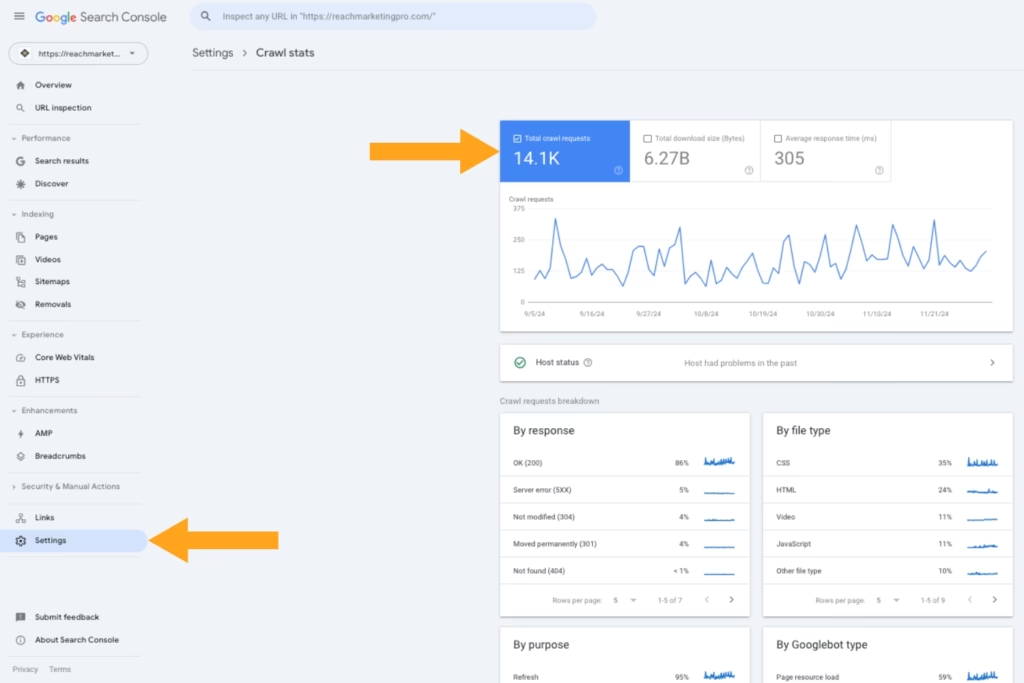
    A screenshot of Google Search Console's Crawl stats report

    Google crawlers have a time limit when crawling your site, known as a crawl budget. It’s determined for you and measured based on various factors, including your site size, number of URLs, total unique pages, content update frequency, and SEO health. 

    One of the most common crawlability problems businesses experience with their sites is a wasted crawl budget. From slow page load speed to duplicate content, these can make crawl bots take longer than necessary to discover your content from wasted time and confusing, redundant site structure.

    You can check your site’s crawl rate on Google Search Console’s “Crawl stats” report to find its current budget. We’ll break down how to optimize your crawl budget based on common issues impacting them below. 

    Duplicate Content

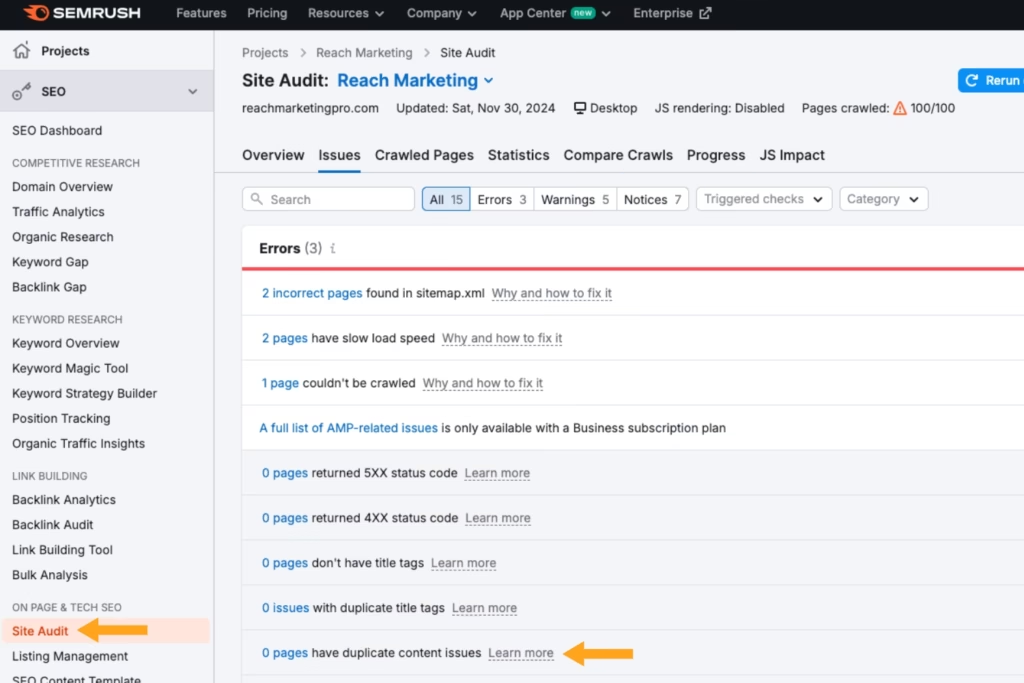
    A screenshot of SEMRush's Duplicate content site audit report

    Whether it’s repeating the same heading titles or page URLs, duplicate website content can cause crawlability issues. Not only can this waste your crawl budget, but it also can make search engine crawlers confused because they don’t know which version to save in their database for indexing. 

    You can discover if you have redundant website content with web crawler platforms like ScreamingFrog and SEMRush. These tools scan your entire site, including duplicate content, and will flag the exact areas for you to fix. You can correct this by updating your existing content so it’s unique or removing the pages altogether. 

    Broken Links

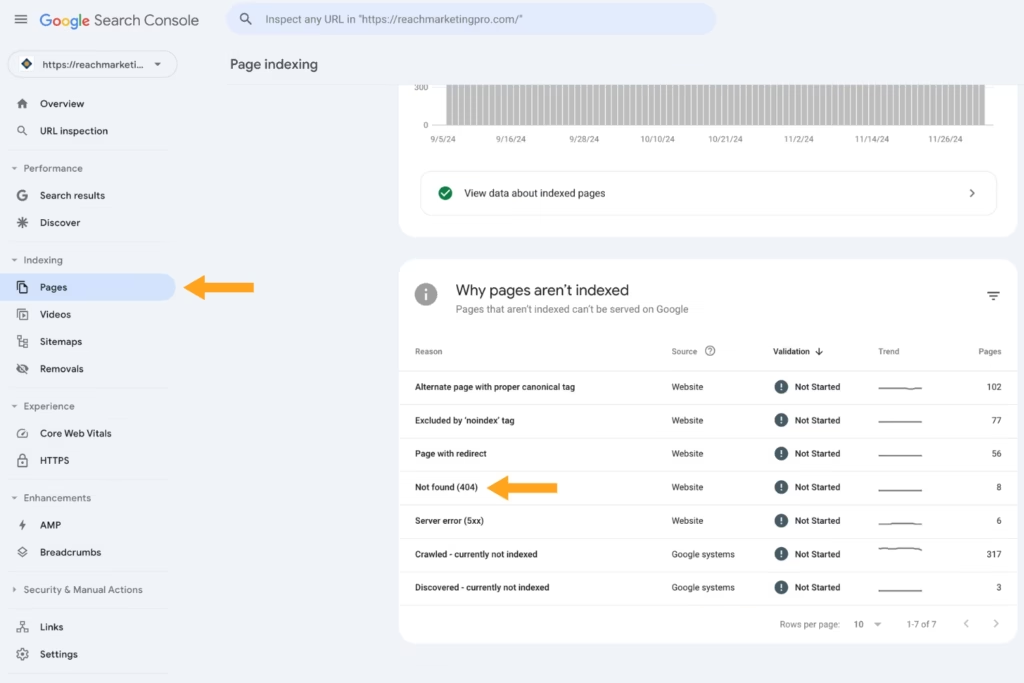
    A screenshot of Google Search Console's Indexing report

    Search engines rely on crawlable links from your website. If it has many broken links, this can cause crawlability problems. Whether it’s a removed page that’s still being linked from other areas of your site, URL typos from a site migration during a website redesign, or 404 errors, these can make it less crawlable. 

    Check for broken links with tools like Google Search Console under the “Indexing” report or Screaming Frog during your site audit. They’ll flag the specific broken URLs and the reasons why—and they’re easy to fix!

    The three main ways to fix broken links are:

    • Redirecting them to another URL 
    • Updating the URLs
    • Removing the links from your site

    Redirect Chains

    While fixing broken links, you may make mistakes when redirecting them, resulting in redirect chains. These are caused by multiple redirects between the original link and the location it’s being sent to. 

    Redirect chains waste your crawl budget because crawl bots continuously follow this loop that never reaches its final page destination—resulting in unnecessary crawling time spent. Search engine crawlers may even stop following it and skip it, causing delayed or missed indexing for certain pages. 

    Like broken links, you can fix redirect chains by updating or removing them during your site audit and routine web maintenance.

    Dated Canonicals

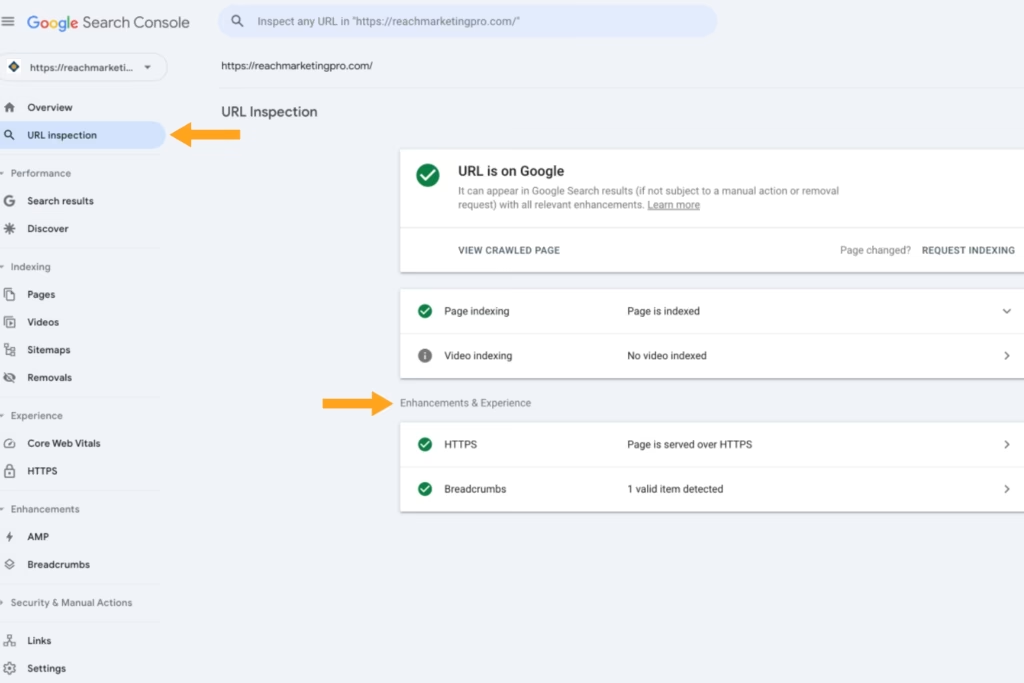
    A screenshot of Google Search Consoles URL inspection tool

    If you aren’t familiar with canonicals, they direct search engine crawlers on which URL you want them to crawl and index from a duplicate page. While some duplicate content is normal, like international web domains and separate blog websites, many dated canonical URLs and tags can lead them to crawl the wrong ones, like older page versions, which waste your crawl budget. 

    URL inspection tools like Google Search Console flag harmful canonical URLs so you can remove them from your site. 

    Slow Page Load Speed

    A screenshot of Google PageSpeed Insights test results

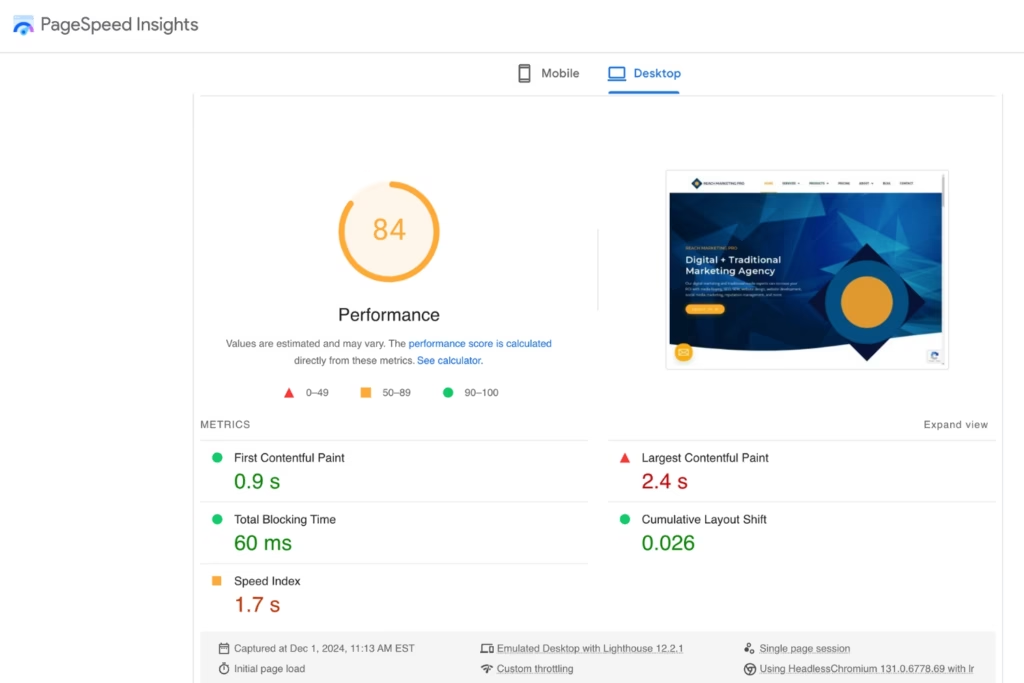
    If your website takes too long to load, this can also negatively impact your crawl budget. Your site’s below-average load speed uses more time to crawl each web page. As a result, your other web pages may not get crawled because your budget was prematurely spent. While sites differ in size, the optimal page load speed shouldn’t take more than three seconds

    You can check your site’s average loading times on PageSpeed Insights. All you have to do is copy and paste your website’s URL into Google’s free tool. It measures your website’s desktop and mobile load speeds and diagnoses performance issues impacting them, such as unused Javascript or CSS code. 

    You can improve your site’s page loading speed by:

    • Minifying Javascript and CSS code with unnecessary rules or dense structures to reduce the files loaded on your web pages
    • Compressing large media files, like background videos and images, to a lower resolution
    • Upgrading or switching web hosting plans with larger servers that can better host your site’s size

    That way, you can ensure your website has an efficient crawl rate and optimized crawl budget.

    Poor Core Web Vitals

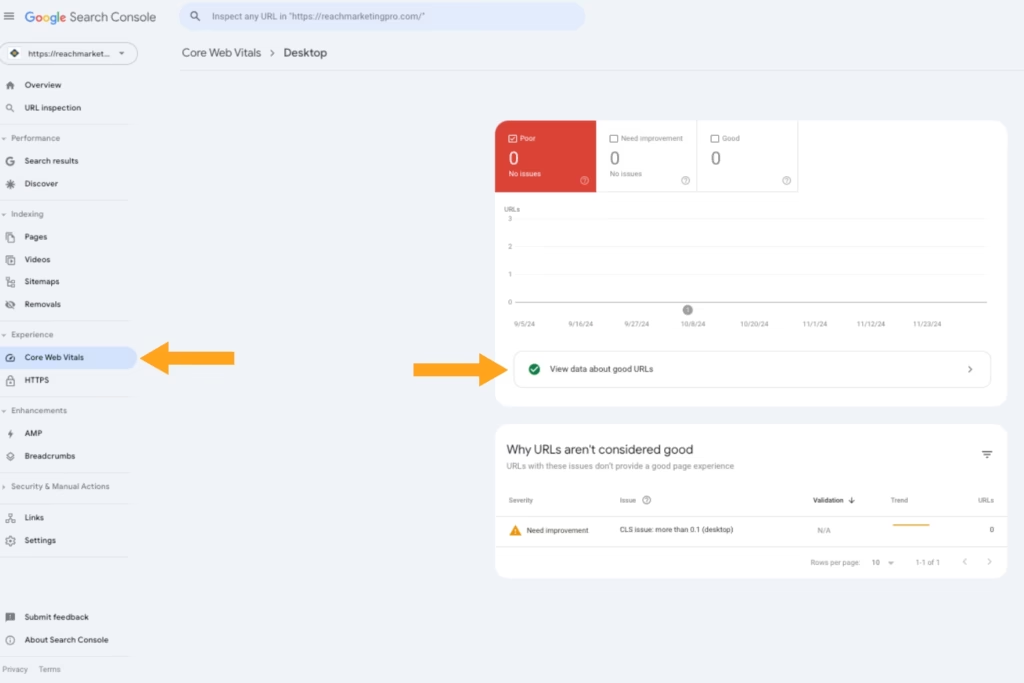
    A screenshot of Google Search Console Core Web Vitals report

    If your website has poor performance, this can cause crawlability issues. Your site’s health can be checked on Google Search Console’s Core Web Vitals. These metrics measure your website’s overall performance for loading, responsiveness, and visual stability on mobile and desktop. 

    Don’t get discouraged if your site fails the Core Web Vitals test. Google will diagnose the areas of your website causing these issues with solutions to fix them, such as caching page content and improving site speed.

    Remove Unnecessary Pages From Robots.txt Files

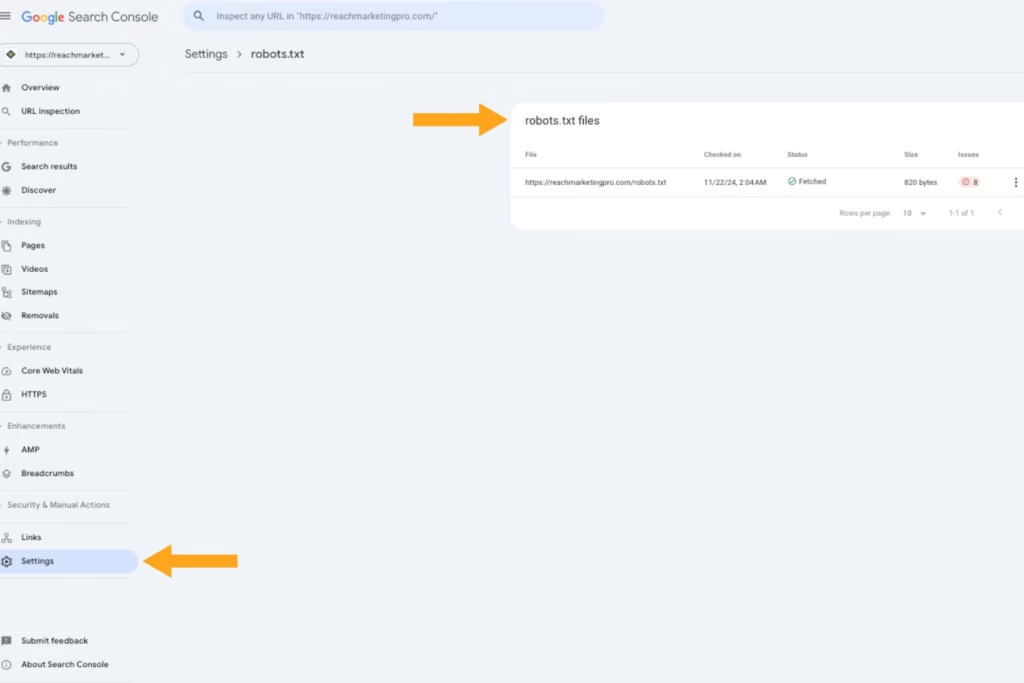
    A screenshot of Google Search Console robots.txt files dashboard

    If you don’t know, a robots.txt file is a plain text tile that directs search engines how you want them to access and crawl your site. It’s like a recipe written in the language crawl bots understand so they know how to follow it. 

    As a tip, don’t include all your web pages in your robots.txt file that don’t require crawling. For example, shopping carts and staff directories typically don’t need to be crawled for users because they’re not intended for SEO and focus more on on-page user interaction.

    Removing these unnecessary pages can optimize your crawl budget, so it prioritizes the ones you want while preventing your site from being overloaded with bot traffic requests.

    Resubmit XML Sitemaps After Content Updates & New Pages

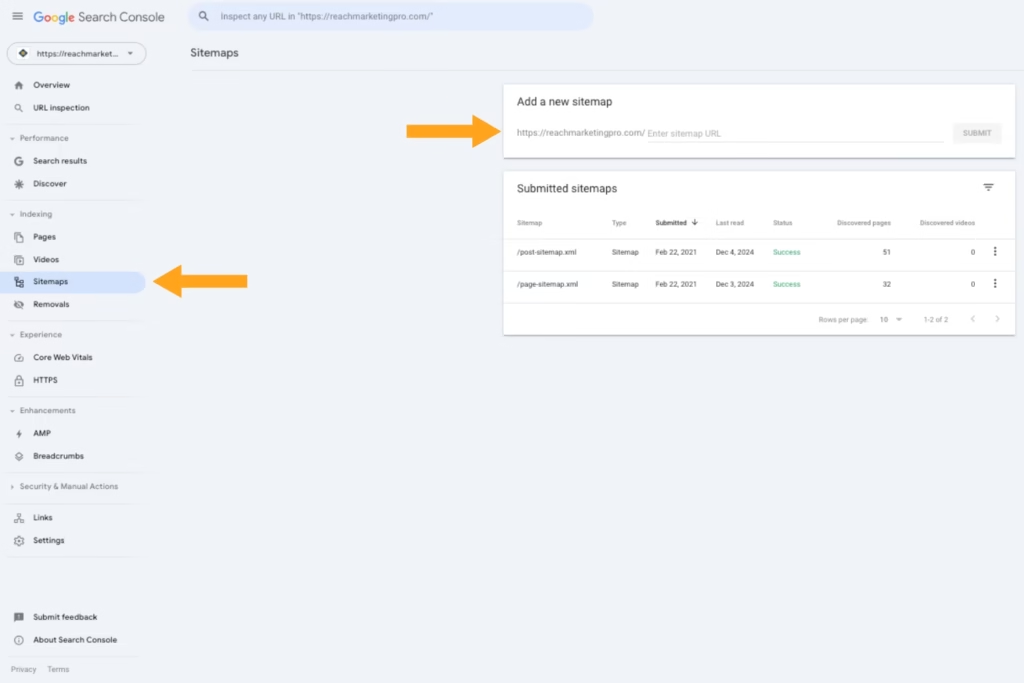
    A screenshot of Google Search Console's Sitemap dashboard

    In addition to providing robots.txt files, you must submit XML sitemaps to Google for efficient crawling. While robots.txt files are like a recipe, XML sitemaps are as the name suggests, a map of your site. It acts as a blueprint of your site structure for search engine crawlers to reference.

    Even if you submitted an XML sitemap already, resubmitting it after content pages and new page creations is the best crawling practice. It gives crawl bots the most up-to-date version of your site so the right one is shown to users when searching for information related to your business online.

    You can submit XML sitemaps on Google Search Console, and best done by web developers—especially if you don’t know how to crawl a website. While sitemap generators exist, web developers have the coding expertise to create them more accurately and prevent wasted crawl budgets due to structural errors.

    Add Relevant Structured Data to Web Pages

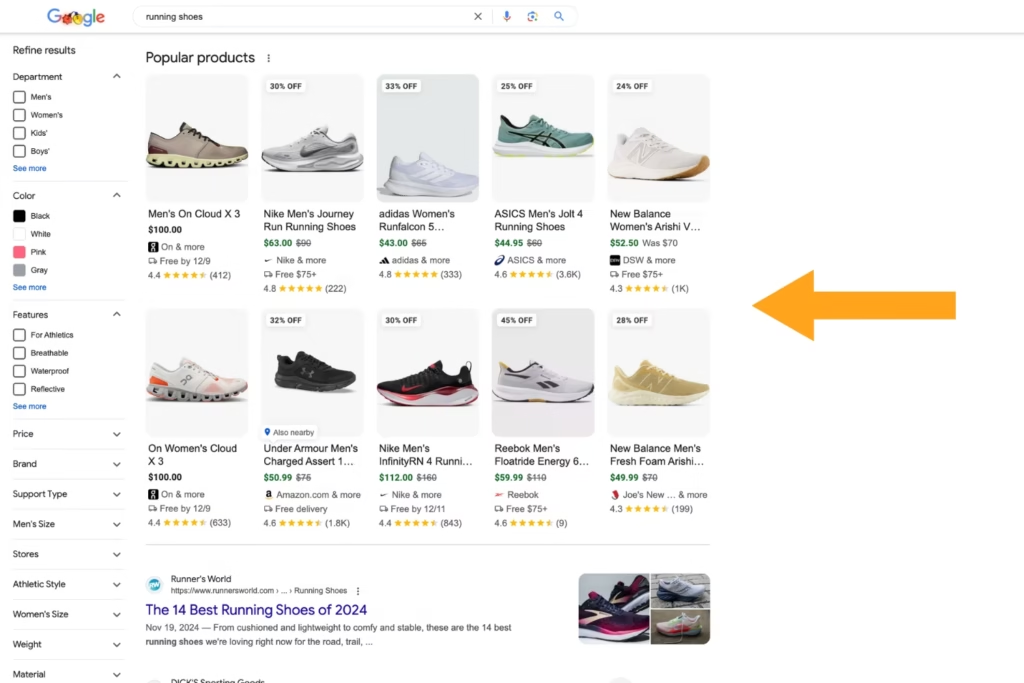
    A screenshot of Google SERP rich results on running shoes

    Structured data helps search engine crawlers better understand your page’s content. Although you’re providing a robots.txt file and XML sitemap, structured data contextualizes your web pages to maximize their crawlability and online visibility from rich results in the SERP. 

    Rich results are unique features that stand out from the SERP’s standard blue links and textual elements, such as product feature carousels and images.

    The most common types of structured data are:

    • Reviews schema markup for product pages
    • FAQs schema markup for demo pillar pages and blogs
    • Navigation breadcrumbs for users to backtrack their pages more easily

    You can test your web page for rich results on Google Search Console to ensure the structured data you implement are relevant.

    Search Engine Crawling FAQs:

    What is Crawling in SEO?

    SEO crawling is the process search engines use to discover your website. It’s the preliminary step before they save it in their database, known as indexing, so it shows your site content to users when using relevant search queries.

    What is a Web Crawler?

    Web crawlers are the bots search engines use to discover your site so it becomes visible on their platform. 

    How Do Web Crawlers Work?


    Web crawlers are search engine bots that use an automated process to find your site’s content so it can download it into their database (index) next. Search engines use web crawlers to retrieve your site’s information and display it to users when using queries relative to it.

    Keep Your Site Visible Online with SEO Web Experts

    Don’t let your website disappear. At Reach Marketing Pro, we’re a full-service digital agency with extensive experience in site-wide optimization for greater crawlability, indexation, and overall SEO performance. These include websites of all sizes and various CMS systems, like WordPress, Shopify, Webflow, Dealer.com, and more.

    Our team of SEO experts and web designers/developers can help you navigate the complexities of crawling. That way, you can improve your site’s performance and better support your bottom line.

    Ready to maximize your site’s online visibility?

    Learn more about our SEO and web design/development services, or contact us today!

  • Automate & Elevate Your Content: 6 Best AI Writing Tools for Businesses

    Automate & Elevate Your Content: 6 Best AI Writing Tools for Businesses

    Artificial intelligence (AI) text generators initially received a bad reputation for lack of unique content. However, machine learning and training in properly using these apps have advanced AI content writing to help businesses streamline their marketing efforts ethically. 

    So, how can you automate and elevate your content with AI? Learn our six recommendations on the best AI writing tools and how to leverage them correctly to create personalized content. 

    What is the Best AI for Writing? 

    A graphic of two people working with an AI robot on a cloud system


    AI has disrupted the digital marketplace in all facets, from SEO to advertising, and it’s here to stay. Current AI marketing trends show it’ll continue to advance, so your business should understand how to find the best text generators. That way, you use them correctly to prevent accidental plagiarism and promote a greater ROI on your content marketing

    How to Find the Best AI Writing Tools

    When searching for the best AI tools for writing, there are key attributes to look for, including:

    • Plagiarism Detection: They should offer a feature to run their generated content through a plagiarism scanner to ensure it’s original.
    • User-Friendliness: They should be easy to use for all skill levels, such as text prompt templates and recommendations to enhance your AI content. 
    • Content Personalization: They should have specific industry categories or target audience prompts for you to create personalized short and long-form content.
    • Fact-Checks: They should have a feature that scans their generated content through a fact checker to verify its accuracy. 
    • Content-Specific Platforms: AI tools differ in content focuses, like novel writing and SEO blogs, so the platform you pick should be specific to what your business requires.

    While it may seem daunting to try AI if it’s new to your business, leveraging it offers several advantages for your content marketing. They help reduce writer’s block by generating topics and text as inspiration to kickstart the creation process. AI writing tools also provide simplified summaries of long-form content to analyze them faster. 

    These are just a few of the benefits of using AI content. 

    However, they all share a primary purpose—boosting productivity by reducing manual writing tasks so your company can become more efficient. 

    How to Use AI Content Generators Correctly

    As with any marketing software, there are pros and cons of AI content writing if you don’t know how to use it. While some applications offer plagiarism detection, you should never use their generated text word for word. AI content tools should act as a foundation and inspiration, not a replacement for your writing. 

    Additionally, if you’re using AI text generators for SEO blogs, this doesn’t replace your keyword research. They don’t gather keywords when you enter prompts, so you must still use SEO software to optimize your AI-generated content.

    Best-use practices for AI writing tools include:

    • Detailed Prompts: Enter as many instruction details as possible into your prompts to generate a higher quality content output, including tone, target audience, and the company it’s for. 
    • Referential Research: In addition to detailed prompts, include your own research and add necessary citations for the AI tool to reference and enhance its content accuracy. 
    • Personal Fact-Checks: While AI writing tools offer fact-checking, also check this yourself to verify its accuracy by reviewing it or using third-party tools, like Google Fact Check Explorer
    • Content Editing: Always edit AI-generated content to tailor it to your client’s branding and prevent harming your credibility with plagiarism.

    Remember, AI is still relatively new. But it offers countless opportunities to save you time by using it properly. 

    Streamline Your Content Workflows: The 6 Best AI Writing Tools Businesses Should Leverage


    Now that you know the benefits of using AI-generated content, how to use it, and what to look for in different applications, below are the six best AI writing tools to consider and why they make the list. 

    1. ContentShake AI

    A screenshot of SEMRush's ContentShake AI interface
    Credit: SEMRush

    If your business creates SEO content, such as blogs and web page copy, look for AI generators focusing on producing optimized content. As one of the leading SEO platforms, SEMRush has its own AI text generator, ContentShake AI. What separates it from other AI writing apps is that it combines SEMRush’s SEO data to create high-ranking AI-generated content 12 times faster

    ContentShake AI uses real-life competitor insights to create SEO-optimized content for organic traffic and engagement. It even scores how well it’s optimized per Google’s algorithms and SEO content guidelines. 

    While SEMRush claims you don’t need to do extra keyword research, we always recommend doing so to verify its accuracy and maximize your content’s SEO performance. 

    2. ChatGPT

    A screenshot of OpenAI's ChatGPT interface
    Credit: OpenAI

    You’ve likely heard of ChatGPT, as one of the original AI text generators. Developed by OpenAI, it’s an AI chatbot that generates content via conversational prompts and machine learning models. 

    While ChatGPT doesn’t have a specific content focus, you can use it for diverse writing tasks, including:

    • Emails, articles, web pages, outlines, essays, resumes, cover letters, poems, etc. 
    • Application and website coding in multiple programming languages
    • Summaries of long-form content, including research journals, books, etc. 
    • Complex problem-solving, like debugging your existing website code, content edit suggestions, etc.

    What makes ChatGPT one of the best AI writing tools is it remembers your conversations. As you continuously use it for clients, it stores information from your previous prompts and references it to better produce ongoing personalized content.

    3. Jasper AI

    A screenshot of the Jasper AI interface
    Credit: Jasper AI

    If you’re looking for business-focused AI content generators, consider JasperAI. Like ChatGPT, it’s also a large language model that uses AI to create content. However, JasperAI is the better option for marketing-oriented AI content. It’s specifically programmed for marketing content writing, like emails, blogs, and social media posts.

    4. Google Gemini

    A screenshot of Google's Gemini AI interface
    Credit: Google Gemini

    Google has its own AI content generator, Gemini. It has two focuses: web developers and businesses. If your company wants to streamline web builds and designs, it uses state-of-the-art generative AI models for coding in various programming languages. From flexible frameworks to customizable code and problem-solving, it provides countless solutions for your developers.

    Regarding business use, Gemini acts as your AI writing assistant across your Google Workspace. It integrates with Gmail, Docs, Sheets, and more to centralize and automate your writing tasks. 

    Gemini crafts content drafts, including blog posts, proposals, advertising copy, and more. It can even generate customized images with a single prompt to enhance your visual branding

    5. Claude AI

    A screenshot of the Claude AI interface
    Credit: Claude AI

    Similar to ChatGPT, ClaudeAI is an AI-powered chatbot designed to generate various types of text based on conversational prompts and large language models. From coding to long-form content summaries and proofreading, you can leverage ClaudeAI for almost any writing project. 

    However, ClaudeAI produces more human-like writing that sounds less generic than ChatGPT. While ChatGPT excels at complex problem-solving, ClaudeAI is best suited for more personalized content. 


    6. CoPilot

    A screenshot of Microsoft 365's CoPilot AI interface
    Credit: Microsoft 365

    Like Google, Microsoft has its own AI content writing assistant, CoPilot. It similarly integrates across Microsoft 365 apps, including Word, Excel, Teams, and PowerPoint. CoPilot combines large language models and your company’s organizational data to streamline production workflows. 

    Some notable content writing features include:

    • Creating and refining existing content by referencing up to three Word documents
    • Transforming and condensing PowerPoint presentations from existing documents with speaker notes
    • Summarizing complex data in Excel to help you analyze it faster with filters
    • Recapping Teams conversations and key discussion points based on chat history

    CoPilot is one of the best AI content writing tools because you don’t need to enter prompts to generate text. It directly pulls information from your Microsoft apps, including files, emails, chats, and meeting notes—making it user-friendly for everyone. It also has different CoPilot versions for small to medium-sized businesses and specific industries, like public sectors and education.

    Words Matter–Get Quality Content Writing That Works with Reach Marketing Pro

    While AI text generators streamline your content marketing workflows with automation and advanced learning models, you can maximize their performance with professionals. AI writing tools still require a learning curve to leverage their fullest potential and precise editing to ensure it’s accurate and original. 

    Let us help you generate a greater ROI for your content marketing. At Reach Marketing Pro, we’re a full-service digital agency with extensive experience creating content across diverse industries. From SEO-optimized blogs to compelling website messaging and effective ad copy, we create high-quality content that supports your bottom line.

    Learn more about our content writing services, or contact us to boost your business’s marketing productivity today! 

  • SMS and Email Marketing: How to Combine Strategies to Reach More Customers 

    SMS and Email Marketing: How to Combine Strategies to Reach More Customers 

    Combining SMS and email marketing into an omnichannel strategy can significantly improve your campaign’s results. Emails are best for longer, scrollable content, while SMS focuses on short-form transactional content. Coordinating both allows you to leverage the strengths of each channel to maximize your campaign’s impact.

    From increasing deliverability to boosting content ROI and improving personalization per customer journey, learn how this orchestration can better support your bottom line. 

    SMS and Email Marketing: Benefits of Integrating Multi-Channel Strategies for Your Bottom Line

    A graphic of two people shaking hands and making a transactional deal over a laptop

    There are several advantages to integrating your SMS and email marketing strategies. Here’s how a multi-channel approach can reach more of your customers.

    Expanded Market Reach

    Most consumers nowadays own a smartphone and check their texts at least 11 times daily within a minute of receiving them. They’re not only using it to browse on social media but also to make informed purchase decisions when shopping online. 

    The conversational nature of text message marketing even encourages 63% of consumers to engage with a brand’s SMS programs twice a week! This same study shows only 31% of consumers respond to a brand’s emails at the same rate weekly. 

    If they’re not subscribed to your emails or SMS, this consolidated marketing approach can meet them where they are and expand your market reach. Reaching mobile audiences on their preferred platform helps you connect with them. It centralizes their attention, which is typically divided across multiple channels.

    Stronger Multi-Channel Campaign Performance

    Did you know that SMS marketing messages have a 98% open rate compared to email’s 20%? These statistics show your SMS campaigns are more likely to have a higher engagement rate and stronger performance overall among your recipients. And you can leverage this to cross-promote your emails—without creating all new content! 

    You can re-purpose your email marketing content and convert it into micro SMS campaigns, such as:

    • Coupons, promotional codes, and loyalty program discounts
    • Back-in-stock notifications and low inventory alerts
    • Holiday sales or upcoming event announcements
    • Order, shipment, and delivery confirmations 
    • Abandon cart reminders

    It’s important to note that you shouldn’t send duplicate content via SMS and email. If your customers see the same text message as your email blasts, they’re 37% more likely to unsubscribe because it’s redundant, spammy, and lacks value. 

    Centralized Customer Data

    A graphic of two people reviewing three customer data profiles and their reviews

    Combining email and SMS marketing allows you to consolidate customer data into one platform. A centralized CRM with SMS and email customer data makes it easier for you to analyze and create more effective campaigns. 

    You can update customer data profiles to show them more relevant content, such as product promotions related to their most recent purchase and order history.

    It also makes segmentation more efficient because you can organize your contacts by stage in their customer journey and channel. You wouldn’t send a loyalty discount email to new customers or SMS promotional sign-ups to people already subscribed. 

    Centralized SMS and email customer data promote personalization and greater efficiency, leading to more successful outreach.

    Increased Customer Engagement and Lifetime Value

    As mentioned above, SMS recipients typically engage more since they have a significantly higher open rate over email. But what about those who sign up for both your channels? Studies show that SMS email subscribers are 2.4 times more likely to buy than solely SMS ones. 

    This history of increased customer lifetime value of recipients who engage with SMS and email is more cost-effective. Retaining existing customers is cheaper than acquiring new ones and provides long-term benefits.

    Keeping your current customers happy also makes them more likely to refer your business to people they know. In return, you gain a more loyal customer base and sustainable revenue sources since they’re more likely to repeat purchases because they trust your brand. 

    Greater Content Marketing ROI

    Utilizing email and SMS marketing can improve your campaign’s efficiency for a greater content marketing ROI. Your business is investing time and resources into these content marketing campaigns. You shouldn’t be creating content for the sake of doing it. It should support your bottom line and content marketing goals. 

    This centralized approach increases your content marketing ROI with the following:

    • Prevents you from sending irrelevant content, like duplicate messages, based on your customer’s interactions
    • Leads to stronger campaign performance metrics, like opens, clicks, and conversions, because of your expanded market reach
    • Provides more effective A/B testing to create better-performing campaigns because you know what resonates with your audience best

    How to Combine SMS and Email Marketing Strategies to Boost Customer Engagement and Revenue

    A graphic of a person reviewing strategies on mobile, desktop, and tablet

    Now that you know the benefits of utilizing email and SMS for your marketing efforts, here’s how to combine them for optimal results. 

    Send Cross-Promotional Content to Increase Subscribers

    You can’t reach more customers if they aren’t subscribed to your email or SMS marketing lists. However, you can encourage more people to sign up with channel-exclusive incentives. You can increase SMS subscribers by cross-promoting it to your email contacts with rewards and offers. 

    For example, you can send email blasts with special discounts for opting into your SMS marketing. This cross-promotional approach can be done vice versa if you want to build a bigger audience on your email marketing list.

    Segment Your Subscribers by Channel and Engagement

    The next step to developing an email SMS marketing strategy is segmenting your subscribers. Organize them by single and multi-channel subscribers so you know who to focus on for email, SMS, and both. That way, when you create email SMS campaigns, you can promote relevant content per platform. 

    Create Personalized Drip Campaigns

    Drip campaigns are blasts sequenced and triggered by customer interactions. They’re typically used in email marketing to contact customers with various touchpoints based on what they do, from open to purchase and unsubscribe. However, you can also utilize SMS email marketing in personalized drip campaigns.

    An example of an SMS email drip campaign is:

    • Welcome emails for new sign-ups 
    • Initial abandon cart email
    • Follow-up abandon cart SMS 
    • Purchase confirmation email 
    • SMS order review request

    We recommend using email and SMS marketing automation to streamline this process with data-driven metrics for you. Platforms like MailChimp and Constant Contact have built-in SMS email features that automate the sequencing of these touchpoints per customer interaction. 

    That way, you tailor your content for each unique subscriber based on where they are on their customer’s journey. Some customers may be ready to buy and waiting for a promotional sale, while others are considering their options between you and your competitor. Personalization is key not to only SMS emails but also to effective marketing. 

    Analyze SMS Email Campaigns for Improvement

    As with any of your marketing efforts, you should always analyze your performance metrics to uncover areas of improvement. 

    Key metrics to focus on in your SMS email campaigns include:

    • Open, click, and engagement rate per channel 
    • Conversion rates for SMS 
    • Unsubscriber rates per channel

    We recommend using automated email SMS platforms to streamline the data analytical process because they generate custom reports with recommendations per campaign. They analyze the performances of each channel and customer interactions with greater efficiency to maximize your next campaign’s performance with data-driven strategies. 

    SMS and Email Marketing FAQs:

    A graphic of two people reviewing their marketing strategies on mobile and laptop

    What’s the Difference Between SMS Marketing vs. Email Marketing? 

    The difference between SMS vs. email marketing is the channel they’re used on and content length. SMS (Short Message Service) marketing uses short-form texts and sends them to all cell phone types, including Android and Apple. 

    Email marketing is obviously for emails and can be sent to any platform, like Gmail and Outlook. These are typically longer forms with scrollable content. 

    What is an SMS Email?

    An SMS email is a marketing text message converted from an email blast. It reformats email content into short-form texts and is sent to the subscriber’s cell phone. 

    Can I Send an SMS to Email?

    Yes. Sending SMS from email blasts can be done and vice-versa. 

    How Do You Convert an Email to a Text Message? 

    Email marketing platforms convert emails to text messages via SMS gateways. An email is reformatted shorter and sent to an SMS email address linked to the subscriber’s phone number. You can find SMS emails with phone validating tools, like NumVerify, which also integrate with email marketing platforms.

    Boost Your Inbox Impact with Professional Email and SMS Marketing Services

    It can be challenging to strengthen your SMS email marketing efforts, with various platforms to manage, analyze, and create content for—especially on a monthly or weekly basis. 

    Let us maximize your campaign’s potential. 

    At Reach Marketing Pro, we’re a full-service digital agency with extensive experience in email SMS marketing. We can create and optimize your existing campaigns with custom visuals, effective messaging, and multi-channel personalization for greater ROI. 

    We’ll also include monthly reports to continuously track and measure the success of your email SMS strategies and improve them for better performance. 

    Ready to reach more of your customers? 

    Learn more about our email marketing services, or contact us today! 

  • Website Project Management: A Complete Guide for Design & Development 

    Website Project Management: A Complete Guide for Design & Development 

    Your website is a multi-faceted platform with various moving parts and siloed teams to track continuously. Do you have an organized system to manage ongoing projects and daily tasks simultaneously? 

    From regular maintenance to complete site redesigns, having streamlined workflows for website project management is essential. It ensures the design and development of your site remains efficient with the time and resources your business invests in. 

    While certain aspects require collaboration, your web developers, designers, SEO copywriters, and clients should all be on the same page to better deliver quality work. 

    If they’re constantly disrupted to redo site designs that stray far from the original concept or complete multiple rounds of copy edits that could’ve been consolidated, it can cost you more than necessary. It also increases the chance of mistakes happening due to this lack of focus. 

    Below is a complete guide to project management for websites to maximize your work efficiency and budget—without overwhelming everyone involved. 

    Website Project Management for Design & Development: A Complete Guide for Seamless Collaboration & Execution

    A graphic of three people meeting and reviewing statistics

    Website project management should be a separate department or assigned to a specific role outside your dev ops and designers. They’re responsible for their own technical tasks and need proper guidance from a website project manager to execute them efficiently. 

    Here’s how to ensure you set your web teams up for success in design, development, and everything in between. 

    Create a Website Project Plan 

    The first step for completing anything related to your site is creating a clear plan for everyone involved. This includes project management for routine site maintenance, new web builds, and redesigns for internal and external teams. 

    A website project plan should include the following:

    Understanding Your Web Project’s Goals

    What are the goals behind your website’s tasks or projects? Whether you’re redesigning, building a new one, or optimizing it for SEO, understanding the reason behind your site’s projects is the foundation of its success.

    For example, if you’re creating web content for the sake of doing it, it’s not researched-backed. Your website’s projects should be data-driven to ensure you remain on strategy for your bottom line.

    Ask your team the following questions if you need help figuring out your site’s project goals:

    • Why are we redesigning this site, and what is this aiming to accomplish? 
    • Why are we building a new site, and what is this aiming to accomplish? 
    • What are our top and lowest-performing web pages? 
    • Which website performance metrics do we want to improve or sustain?
    • How do we want our website to support our business goals?  

    That way, everyone is aligned on the overall mission of the website’s project goals. 

    Defining Key Web Project Details

    Before you begin assigning tasks to your web teams, you must define the key details of how these will be executed and the project scope. 

    Buffer Budget with All Website Deliverables

    First, create a client-approved buffer budget for additional tasks that may pop up or take longer than expected. This budget should include exact deliverables, like the number of redesigned pages or written blogs. Don’t forget to include potential subtasks required, like A/B testing page design concepts and publishing blogs after approval to prevent going out of scope. 

    Deadline Schedules with Your Preferred Project Management Method 
    A graphic of three people creating a calendar schedule for tasks

    Next, set the deadlines for your website’s tasks and how you want to complete them. 

    You can create milestones, like building a few web pages at a time and submitting them for client review. Known as agile web development, this project management methodology allows your team to work in short sprints with a few weekly or monthly deliverables at a time. 

    If you prefer to complete your web projects all at once, choose the waterfall web development approach. However, you must understand the pros and cons of each that best suits your web project’s goals. 

    Agile web project management is best if you’re on a tight deadline because you gain continuous feedback throughout the design and development process that can be turned around faster with fewer deliverables. Waterfall methodology is best for long-term web projects because it allows your team to work uninterrupted and the extra time to finalize the process. 

    Website Project Management Template or Software 

    We can’t stress enough the importance of using website project management platforms like Jira and Trello. Taking advantage of automation saves you time and headaches from manually creating workflows for your site’s projects.

    Depending on the application, these may include:

    • Pre-built website requests for new page graphics, copy edits, add-on features, etc. 
    • Interconnected action items that prevent future web tasks from being assigned until the previous one is completed
    • Sequenced site design/development steps, like preliminary design, code review, and testing
    • Organized web tasks by priority and status of completion  

    Web project management tools streamline your tasks and teams visually and easily in an automated, centralized platform. 

    Organize Web Tasks by Phase 

    Now that your website project plan is finalized, next is organizing the tasks by phase. While project management tools automate this for you, this helps guide your teams throughout the process. 

    Your site’s tasks should be categorized in the following order: 

    Website Project Discovery

    This discovery phase occurs when you first create your website project plan. This initial step is the ideation of your site’s project. However, it requires careful guidance to prevent your discovery meeting from expanding into unrealistic or disorganized expectations. 

    Ensure you only include people directly involved with the project, like a lead web developer, site designer, website project manager, and client representative. It prevents you from having too many cooks in the kitchen and promoting over-communication. 

    You should also prepare questions from your website project plan, like client goals, buffered budget, deliverables, timeline, and project management methodology. That way, there aren’t any surprises that may delay everyone before you start design and development.  

    Web Design

    A graphic of three people designing a website with HTML and CSS

    The site design phase involves multiple people, including web designers, SEO copywriters, and potential clients for approvals. They’re responsible for how the front end of your site will look. It’s especially crucial to organize the design stage of a web project because of the multiple roles you’ll manage. 

    Set your web design team up for success with the following:

    • Submit website examples to your designers for visual layout inspiration, must-have features, etc. 
    • Provide your web designers with everything they need, including branding guidelines, images, logos, optimized web copy, etc.
    • Give platform access to everyone involved to complete design tasks simultaneously across siloed teams
    • Schedule design tasks from highest to lowest priority, like your Home page first and Testimonials page later
    • Centralize all communications within your project management software for internal teams and update their tasks timely if you have edits from clients after review

    You should also standardize core web design processes, including:

    • Creating wireframes for web developers to reference when building sitemaps for the site’s structure
    • Designing the visual layout of all web pages, including colors, font, visuals, and staging links for client review
    • Setting up a content management system (CMS) to host, manage, and upload visuals and text assets for all web pages
    • Registering a web domain so your site owns the rights to its name

    Keep in mind that your web designers and developers work together to complete site projects. The main difference is that site designers create the visual elements, while web developers build and make them usable. 

    Web Development

    The web development phase primarily involves your dev ops team. They’re responsible for building the back end of your site’s functionality, requiring complex processes that must be executed successfully. While each web build is unique per platform and project, you can streamline their workflows more efficiently.

    Standardizing core web development processes should include:

    • XML Sitemap Creation: Creating a blueprint of the site’s structure, navigation, information hierarchy, etc. 
    • Platform Plug-in Installation: Installing popular plug-ins separate from your site platform, like Yoast SEO and WooCommerce
    • SSL (Secure Sockets Layer) Certification: Acquiring the code on your site’s server to create an encrypted connection and secure its data.
    • Website Analytics Software Integration: Connecting the software to your site to track its performance. 
    • Site Code & Tests: Building and testing the site’s various codes and markup languages to ensure proper functionality. 

    While you can use a website project management tool to automate these processes, it still needs to be properly assigned and scheduled.  

    Site-Wide Testing

    Testing your website is comprehensive, but you don’t need to complicate it more with a set process in place. That way, your dev ops and web design teams ensure they don’t miss any crucial steps.

    Create a site-wide testing plan for the following: 

    • Website accessibility for disabled users per ADA compliance 
    • User experience (UX) to provide visitors with seamless interaction in all aspects of your site, including minimal pop-ups, balanced white space, easy navigation, etc. 
    • HTTPS (Hypertext Transfer Protocol Secure) to ensure the HTTP version is redirected for site security 
    • Page load speed on PageSpeed Insights for mobile and desktop 
    • Site audits to check for potential issues, like broken links, invalid CSS/HTML, duplicate headings, and missing metadata 

    Website Launch

    A graphic of three people launching a new website with a rocketship

    Now that your website is ready to go live, your team is in the final phase of design and development.

    Include the following in your workflows for a successful site launch:

    • Submit sitemaps to Google Search Console for crawling and indexing 
    • Train internal staff training for website management, like content uploads and performance tracking
    • Proofread all web copy to ensure everything is accurate and error-free

    Remember, you can always fix minor issues and make design changes once the website is live—so don’t delay the launch for aesthetics and quick fixes! 

    Post-Launch

    Even newly launched websites must be continuously monitored and maintained to ensure they perform as they should. From troubleshooting bugs to optimizing the site for new search engine algorithm updates, your website isn’t a set-it-and-forget-it situation. It’s an ongoing responsibility for your business. 

    Create a post-launch checklist for your web team, including:

    • Scheduling weekly website backups to save your site from accidental data loss
    • Checking conversion paths for proper functionality on forms, page displays, etc.  
    • Cross-promoting the website on social media 
    • Fixing bugs when necessary

    Make Your Site’s Projects Smooth Sailing with a Website Project Manager

    As you can see, project management for website design and development is time-consuming and can get complex, even with automated platforms. Let a website project manager do the heavy lifting for you. 

    At Reach Marketing Pro, we have extensive experience in all aspects of web project management, including site design, development, and maintenance. We’re a full-service digital agency equipped to handle all aspects of your site with our in-house web developers, web designers, graphic designers, SEO copywriters—and, of course, project managers. 

    That way, you can focus on what you do best—managing your business and being an expert in your trade.

    Ready to optimize your website’s workflows and better support your bottom line? 

    Learn more about our website management services or contact us to make your site’s projects smoother sailing today!